
title: Why Everyone Is Talking About Form 1099-DA (And You Should Too)
description: A comprehensive guide to Form 1099-DA, the new digital asset reporting requirement for 2026. Learn how it impacts tax professionals and digital asset investors.
keywords: Form 1099-DA, digital asset tax reporting, crypto taxes 2026, IRS crypto forms, tax professional requirements
The 2026 tax season marks a significant shift in the reporting of digital assets. For the first time, taxpayers and the Internal Revenue Service (IRS) are receiving Form 1099-DA, "Digital Asset Proceeds From Broker Transactions." This form represents the federal government’s transition from voluntary self-reporting to a mandatory third-party reporting system for cryptocurrency and other digital assets.
As of March 12, 2026, tax professionals are navigating the first full cycle of these forms. Understanding the mechanics, requirements, and implications of Form 1099-DA is essential for maintaining compliance and providing accurate advice to clients.
The Origin of Form 1099-DA
The introduction of Form 1099-DA stems from the Infrastructure Investment and Jobs Act of 2021. This legislation expanded the definition of a "broker" to include anyone who, for consideration, is responsible for regularly providing any service effectuating transfers of digital assets on behalf of another person.
The goal was to close the "tax gap": the difference between taxes owed and taxes paid: by providing the IRS with the same visibility into crypto transactions that it has with traditional stocks and bonds via Form 1099-B. After several years of proposed regulations and public comment periods, the requirements became effective for transactions occurring in the 2025 calendar year, making 2026 the inaugural year for issuance.
Defining the Digital Asset Broker
The scope of Form 1099-DA is broad. A "broker" under current IRS regulations includes:
- Centralized Exchanges: Platforms where users buy, sell, and trade digital assets.
- Digital Asset Payment Processors: Entities that facilitate the use of digital assets to pay for goods or services.
- Certain Wallet Providers: Hosted wallet services that provide users with the ability to trade or exchange assets.
- Kiosks: Physical Bitcoin or crypto ATMs.
These entities are now required to track the sale and exchange of digital assets and report that data to both the taxpayer and the IRS.

What Form 1099-DA Reports
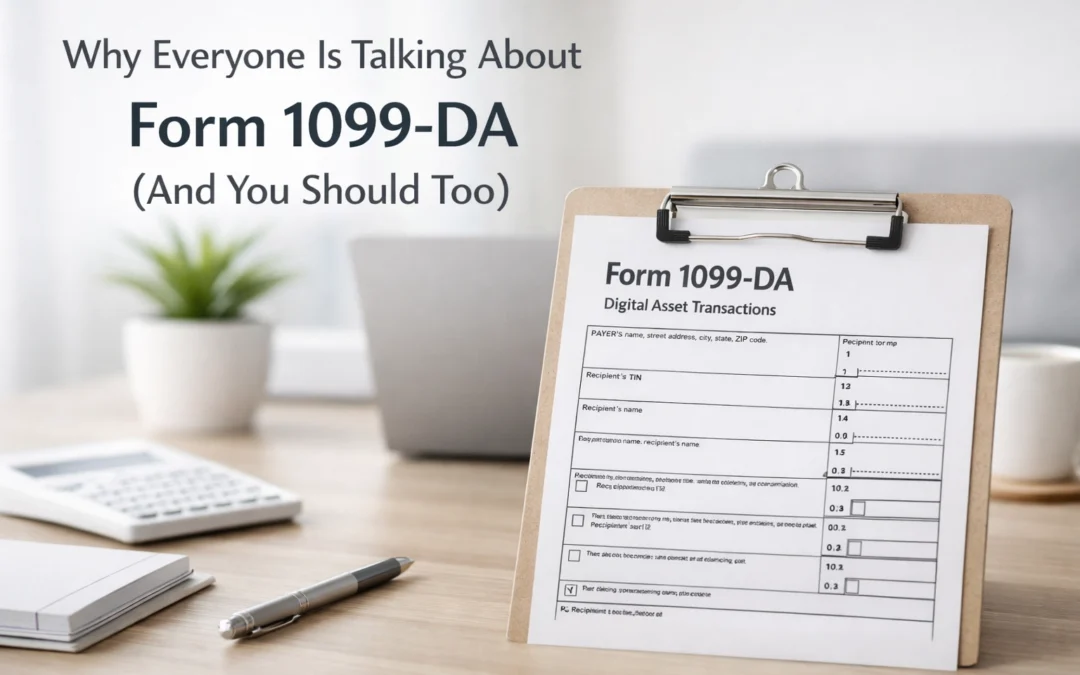
Form 1099-DA is modeled after Form 1099-B but tailored for the unique nature of digital assets. Key data points included on the form are:
- Date of Acquisition: When the asset was originally purchased or received.
- Date of Sale or Exchange: When the taxable event occurred.
- Gross Proceeds: The total value received in exchange for the digital asset, before adjusting for cost basis.
- Cost Basis: The original value of the asset, often adjusted for transaction fees.
- Gain or Loss: The difference between the gross proceeds and the cost basis.
- Asset Type: The specific name or symbol of the digital asset (e.g., BTC, ETH, SOL).
For tax professionals, the "Cost Basis" field is the most critical. If the broker does not have record of the acquisition (for example, if the asset was transferred in from an unhosted wallet), the cost basis may be reported as zero or left blank. This requires the taxpayer to provide manual documentation to avoid overpaying taxes on the full amount of the proceeds.
Impact on Tax Professionals
The introduction of Form 1099-DA changes the workflow for tax preparation businesses. Previously, preparers relied on client-provided spreadsheets or reports from third-party crypto accounting software. While these tools remain relevant, the Form 1099-DA is now the primary document used by the IRS for matching programs.
Increased Reconciliation Requirements
Tax pros must now reconcile Form 1099-DA with the client’s actual records. Discrepancies often arise from:
- Transfers between exchanges that the broker treats as sales.
- Assets acquired years ago before tracking requirements were in place.
- Airdrops, forks, or mining income that might be reported differently by various platforms.
Failure to reconcile these amounts can lead to IRS notices. Professionals should ensure they are using Essential Tax Software or Unlimited Tax Software that supports detailed digital asset reporting and reconciliation.
Managing Client Expectations
Clients may be surprised by the "Gross Proceeds" figure on their Form 1099-DA. If a client traded $100,000 worth of crypto back and forth multiple times, the total proceeds could appear much larger than their actual portfolio value. Tax preparers must explain that tax is paid on the net gain, not the gross proceeds.

Federal and State Law Changes
While Form 1099-DA is a federal requirement, state tax authorities are quickly following suit. Many states have "rolling conformity" or "static conformity" to the Internal Revenue Code (IRC). As the federal definition of a broker changes, state reporting requirements often update automatically.
For more information on staying ahead of these shifts, professionals can monitor the TIG Tax Pros Updates section for the latest on state-level compliance.
Challenges with Decentralized Finance (DeFi) and Unhosted Wallets
One of the most complex areas of the new reporting regime involves unhosted wallets and decentralized exchanges (DEXs). Currently, the IRS has delayed certain reporting requirements for non-custodial participants, but the long-term goal remains full transparency.
If a client moves assets from a centralized exchange to a private ledger or unhosted wallet, the exchange will issue a Form 1099-DA for the "transfer out" if it is deemed a sale, or it will simply lose track of the cost basis. When those assets are eventually sold, the taxpayer must be prepared to prove the original purchase price. This makes meticulous record-keeping more important than ever.
Strategic Guidance for Tax Preparation Businesses
To handle the influx of Form 1099-DA data, tax firms should implement the following procedures:
- Early Data Collection: Request all 1099-DA forms as early as possible. Do not wait for the client to remember their crypto activity.
- Verify EFIN and Certifications: Ensure your firm is properly registered to handle high volumes of digital asset transactions. Review the tax preparer certification requirements for 2025/2026.
- Leverage ERO Services: If you are operating without an EFIN or need back-office support for complex filings, consider ERO services.
- Digital Shift Preparation: Prepare for an environment where paper refunds and manual entries are obsolete. The IRS is moving toward a fully digital ecosystem. For more on this, see Are Paper Tax Refunds Dead?.

Penalties and Compliance
The IRS has indicated that it will be aggressive in enforcing digital asset reporting. Penalties for failing to report transactions or for brokers failing to issue Form 1099-DA can be significant. For the taxpayer, omitting a 1099-DA from their return is an automatic red flag for the IRS’s automated underreporter system (AUR).
For the tax professional, due diligence is mandatory. Under Circular 230, preparers must ask clients about their involvement in digital assets. The question remains a prominent fixture on the first page of Form 1040.
Conclusion
Form 1099-DA is not a temporary trend; it is the new standard for the digital economy. It simplifies the reporting of gains and losses for the average investor while creating a more structured environment for the IRS to monitor compliance. For tax professionals, it offers a more reliable data source but demands a higher level of reconciliation and technical expertise.
By staying informed on these changes and utilizing professional tools from TIG Tax Pros, you can ensure your practice remains competitive and compliant in this new era of digital asset taxation.
For further details on growing your practice or launching new services, refer to our quick tips to grow your tax business and our essential ERO services checklist.