
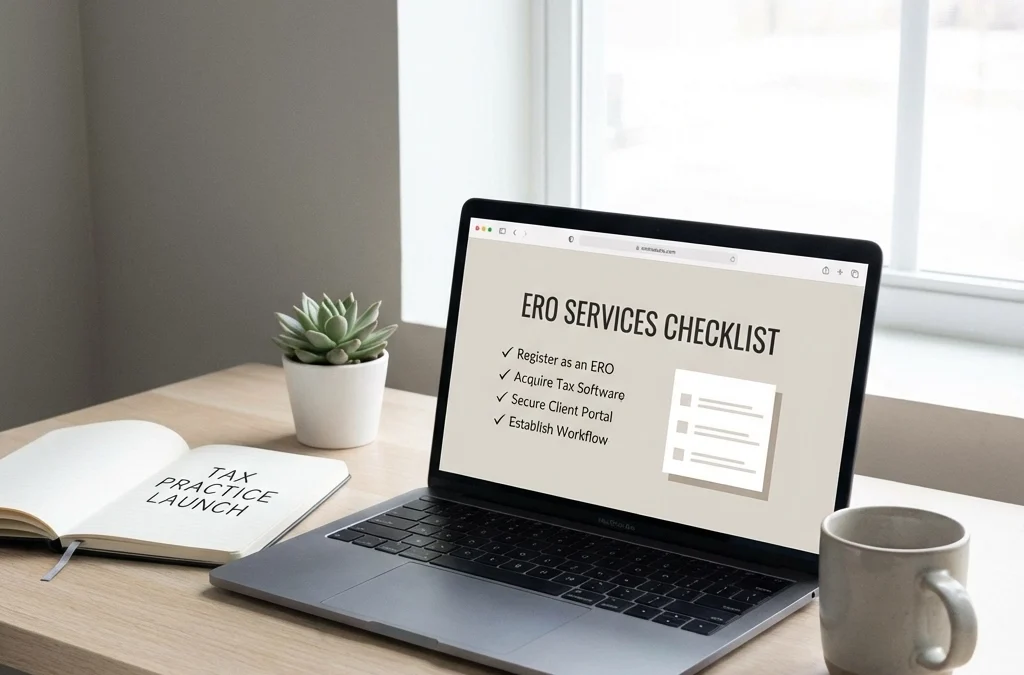
Starting a tax practice requires more than five minutes, but you can complete the essential ERO services checklist and begin your setup process quickly with the right roadmap. This guide breaks down the core requirements for becoming a tax professional through Electronic Return Originator services.
Understanding ERO Services for Tax Preparation Beginners
Electronic Return Originator (ERO) services allow tax professionals to electronically file tax returns for clients. ERO status is required if you plan to prepare and file returns electronically, which is the standard for modern tax practice management.
ERO services provide the foundation for tax professional development by establishing your credibility with the IRS and enabling efficient client service. Without ERO registration, you cannot electronically submit returns, limiting your practice to paper filing only.

Essential Prerequisites: Your 5-Minute Checklist
Business Registration Requirements
Register your business entity before applying for ERO status. Choose between:
- Sole proprietorship with DBA filing
- Limited Liability Company (LLC)
- Corporation structure
Complete state registration requirements and obtain your business license. This process varies by state but typically requires basic business information and applicable fees.
Federal Tax Identification Numbers
Apply for an Employer Identification Number (EIN) through the IRS website. The online application takes approximately 15 minutes and provides immediate confirmation for most applicants.
Obtain your Preparer Tax Identification Number (PTIN) through the IRS PTIN system. All paid tax preparers must have a valid PTIN to prepare federal tax returns.
Professional Certification Path
Complete required education and certification programs for your state. Many states require specific tax preparer certification or enrollment in continuing education programs.
Research your state's specific requirements for tax professional development, as these vary significantly across jurisdictions.
ERO Application Process: Step-by-Step Setup
Creating Your IRS E-Services Account
Navigate to the IRS e-services portal and create your account using your business information. Provide accurate details about your business structure, location, and intended services.
The e-services account serves as your gateway for all IRS electronic interactions, including ERO applications and ongoing compliance requirements.

Completing the E-File Application
Submit Form 8633 (Application to Participate in the IRS e-file Program) through your e-services account. Include detailed information about:
- Business principals and responsible officials
- Physical business location
- Intended filing volume
- Security measures and protocols
The application requires comprehensive documentation about your business operations and security procedures.
Electronic Filing Identification Number (EFIN)
Request your EFIN as part of the ERO application process. The EFIN uniquely identifies your business for electronic filing purposes and links all submitted returns to your ERO account.
EFIN processing typically takes 45 days during peak application periods. Plan accordingly for tax season preparation timelines.
IRS EFIN Alternatives for Immediate Setup
Service Bureau Options
Service bureaus provide immediate electronic filing capabilities while your ERO application processes. These services handle the technical transmission requirements and maintain IRS compliance on your behalf.
Research reputable service bureau providers that offer competitive pricing and reliable support for new tax practices.
Software Integration Solutions
Many tax software providers offer integrated filing services that function as EFIN alternatives. These solutions combine preparation software with transmission capabilities under the provider's ERO credentials.
Evaluate software options that include filing services to streamline your initial setup process.

Essential Software and Infrastructure Setup
Tax Preparation Software Selection
Choose professional tax software that supports your intended client base and filing requirements. Consider factors including:
- Form coverage and complexity
- Electronic filing integration
- Client portal capabilities
- Pricing structure for your expected volume
Compare software options that offer comprehensive support for tax preparation beginners while providing room for practice growth.
Security and Compliance Infrastructure
Implement required security measures for client data protection:
- Secure file storage systems
- Encrypted communication channels
- Access control protocols
- Data backup procedures
Establish these systems before accepting clients to ensure compliance with IRS security requirements.
Financial Management Systems
Set up separate business banking accounts and accounting systems. Maintain clear separation between personal and business finances from day one of operations.
Implement invoicing and payment processing systems that integrate with your tax software when possible.
Client Onboarding and Practice Management
Initial Client Intake Procedures
Develop standardized intake procedures that collect necessary client information efficiently. Create forms and checklists that ensure complete data collection for accurate return preparation.
Establish clear communication protocols and service expectations to set appropriate client relationships from the first interaction.
Quality Control Processes
Implement review procedures for all prepared returns before submission. Establish checklists and verification steps that catch common errors and ensure accuracy.
Quality control systems protect your professional reputation and reduce potential liability issues.

Pricing and Service Structure
Research competitive pricing in your market area and establish clear fee structures. Consider offering packaged services that appeal to your target client demographic.
Document your service offerings and pricing clearly to avoid confusion during client consultations.
Compliance and Ongoing Requirements
Continuing Education Obligations
Understand your ongoing education requirements for maintaining ERO status and professional certifications. Plan annual education schedules that meet all applicable requirements.
Track completed education hours and maintain documentation for compliance verification.
Annual ERO Renewal Process
Prepare for annual ERO renewal requirements by maintaining current business information and compliance documentation. The renewal process requires updated business details and confirmation of ongoing eligibility.
Set calendar reminders for renewal deadlines to avoid service interruptions.
Record Retention Requirements
Implement systems for maintaining required client records and business documentation. IRS requirements specify minimum retention periods for various document types.
Establish both physical and digital storage systems that ensure secure, long-term record preservation.
Building Your Practice Foundation
Marketing and Client Acquisition
Develop basic marketing materials that highlight your professional credentials and service offerings. Focus on local market opportunities and referral relationship development.
Consider digital marketing strategies appropriate for your target market and budget constraints.
Professional Network Development
Connect with other tax professionals, accounting firms, and business service providers in your area. Professional relationships provide referral opportunities and continuing education resources.
Join professional associations relevant to tax professional development in your practice area.

Technology Integration and Efficiency
Cloud-Based Solutions
Evaluate cloud-based practice management solutions that integrate tax preparation, client communication, and business operations. Cloud systems provide flexibility and scalability for growing practices.
Ensure any cloud solutions meet IRS security requirements for sensitive client data.
Workflow Automation
Implement automated workflows for routine tasks including client communications, appointment scheduling, and document collection. Automation increases efficiency and improves client experience.
Start with basic automation and expand capabilities as your practice grows and technology needs become clearer.
Next Steps for Tax Professional Development
ERO services provide the foundation for professional tax practice, but success requires ongoing attention to client service, compliance, and business development. Focus on building systems that support sustainable growth while maintaining quality service delivery.
Regular evaluation of your processes, technology, and market position ensures continued success in competitive tax preparation markets. Professional development through continuing education and industry involvement supports long-term practice viability.
Visit TIG Tax Pros for additional resources supporting tax professional development and practice management solutions.