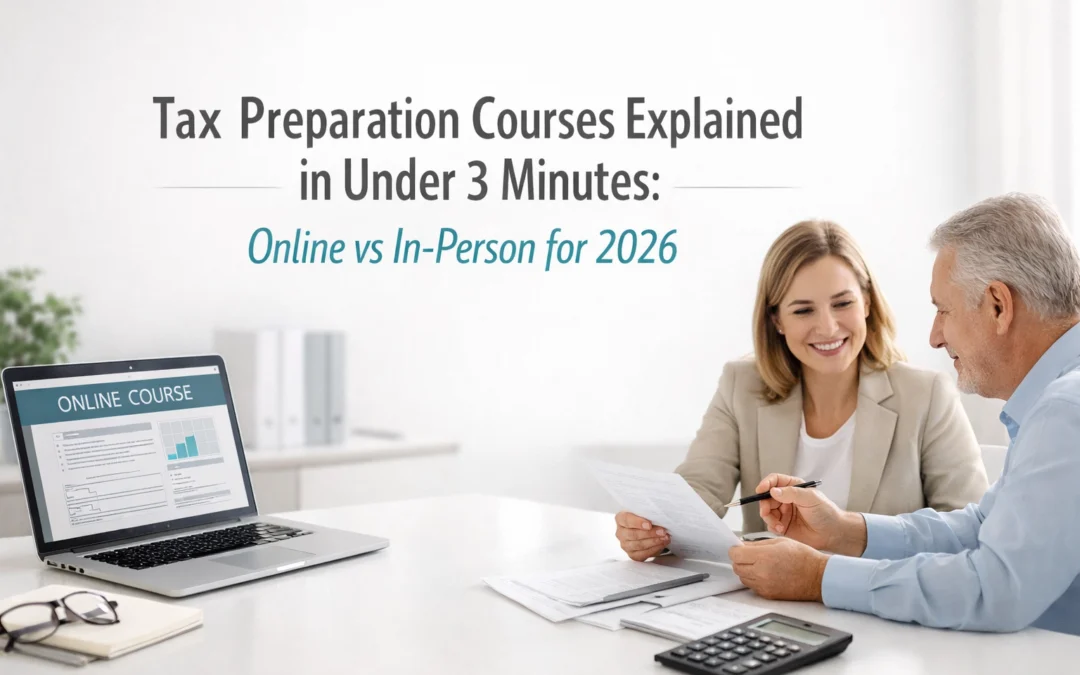
Breaking into tax preparation in 2026 means choosing between online tax courses and in-person tax classes. Both work. Both lead to certification opportunities. The difference is in how you learn best and what fits your schedule.
Online Tax Preparation Courses
Online tax training gives you access 24/7. Log in at midnight or during lunch. No commute. No fixed schedule.
Cost: $300–$2,000 depending on depth. Basic courses covering tax fundamentals run $300–$600. Comprehensive programs preparing you for professional certification cost $1,200–$2,000.
Duration: 3–18 months. Self-paced programs let you finish faster if you have time to dedicate. Most people complete foundational courses in 3–6 months working part-time.
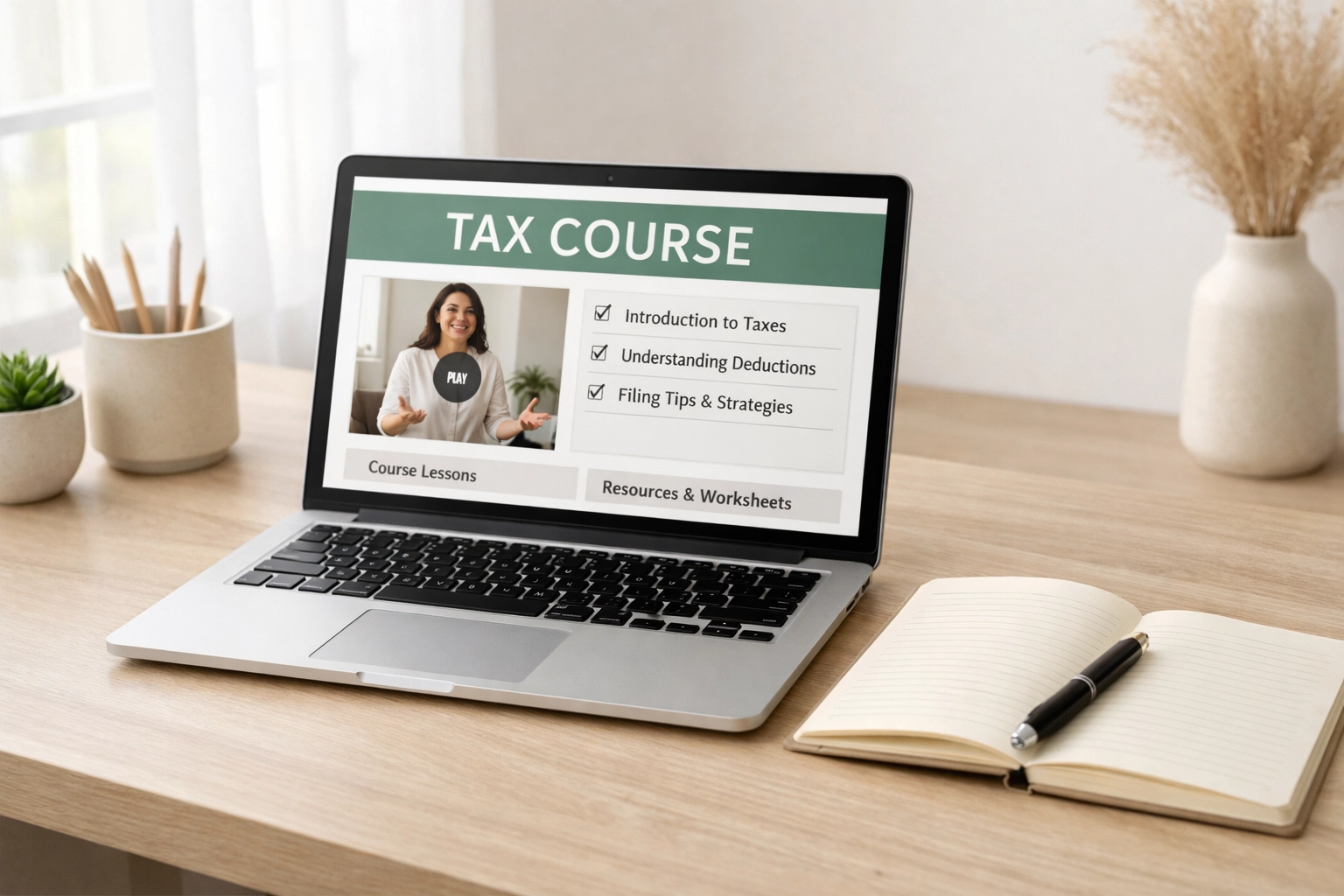
What you learn: Online tax courses typically cover:
- Individual tax returns (Form 1040)
- Business returns (Schedule C, partnerships, S-corps)
- Deductions and credits
- Tax software operation
- Ethics and regulations
- Client communication
Support structure: Quality programs include mentoring from active tax professionals, email support, and discussion forums. You're not completely on your own.
Certifications available: Professional Tax Preparer™, CTEC (California Tax Education Council), AFSP (Annual Filing Season Program), IRS Enrolled Agent prep.
In-Person Tax Classes
In-person tax training means showing up to a physical location on scheduled days. You sit in a classroom with other students and an instructor at the front.
Cost: $1,000–$1,500 for most programs. Price includes materials and instruction but doesn't usually include certification exam fees.
Duration: Fixed schedules ranging from 6 weeks to 6 months. Classes meet 1–3 times per week for 2–4 hours per session.
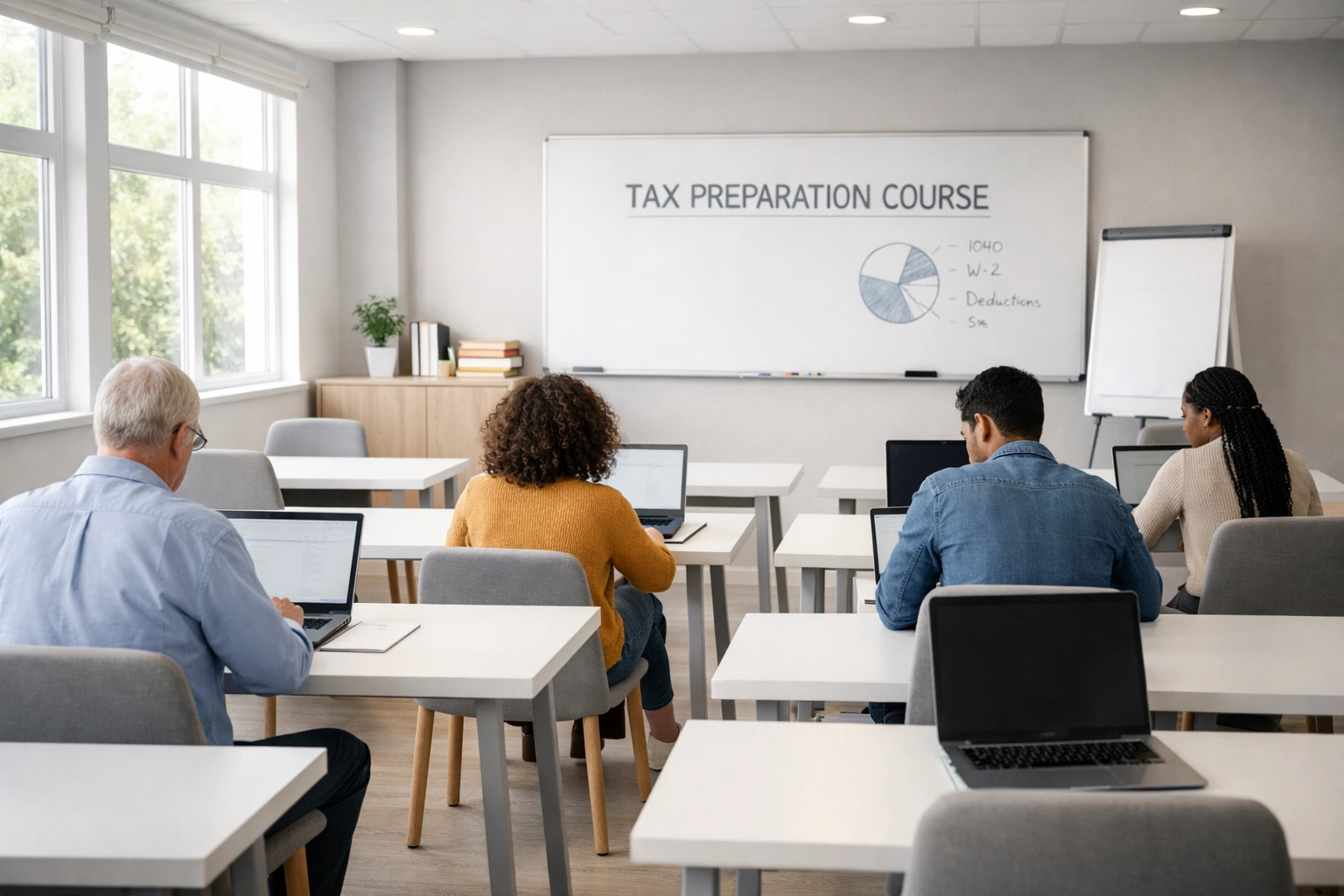
What you learn: Similar content to online courses but delivered in structured modules with hands-on exercises completed in class. Instructors demonstrate software and walk through returns in real-time.
Support structure: Direct access to instructors during class. Immediate feedback on practice returns. Networking with classmates who might become future colleagues or referral sources.
Certifications available: Certificate of completion from training provider. Additional study needed for professional certifications like AFSP or Enrolled Agent.
Side-by-Side Comparison
| Factor | Online Tax Course | In-Person Tax Class |
|---|---|---|
| Flexibility | Complete anytime, anywhere | Scheduled class times only |
| Cost Range | $300–$2,000 | $1,000–$1,500 |
| Duration | 3–18 months (self-paced) | 6 weeks–6 months (fixed) |
| Learning Style | Independent, self-directed | Structured, instructor-led |
| Support | Email, forums, mentoring | Face-to-face instructor help |
| Networking | Limited to online forums | Direct peer connections |
| Certification Prep | Built into advanced programs | Requires additional study |
Who Online Courses Are For
Choose online tax preparation courses if you:
- Work full-time and need flexibility
- Learn well independently
- Want to move faster or slower than a fixed pace
- Live far from training centers
- Prefer lower upfront costs
- Need to fit learning around family obligations
Online works for career changers who can't commit to scheduled classes. It works for current bookkeepers or accountants adding tax prep to their services. It works for stay-at-home parents building skills before kids start school.

Who In-Person Classes Are For
Choose in-person tax classes if you:
- Learn better with structure and accountability
- Want immediate feedback from instructors
- Value networking with other students
- Can commit to scheduled class times
- Prefer hands-on demonstration
- Need external motivation to complete training
In-person works for recent graduates who are used to classroom environments. It works for people who tried online learning and didn't follow through. It works for those who want to meet potential employers or colleagues face-to-face.
2026 Tax Training Landscape
The tax code changes every year. 2026 brings specific updates you need to know:
- Expanded clean energy credits
- Modified business deduction rules
- Updated depreciation schedules
- New reporting requirements for digital transactions
Both online and in-person programs update their materials annually. Check that any 2026 tax training includes current-year content, not outdated material from 2024 or earlier.

Certification Matters
Taking a tax preparation course is step one. Getting certified is step two.
IRS requirements: Anyone can prepare tax returns. But to represent clients before the IRS, you need credentials: PTIN (Preparer Tax Identification Number) at minimum, preferably AFSP, Enrolled Agent, CPA, or attorney status.
State requirements: California, Oregon, Maryland, and New York require specific registrations or minimum education hours. Check your state's requirements before choosing a program.
Professional credibility: Clients trust certified preparers more than uncertified ones. Certification often leads to higher fees and better client retention.
TIG Tax Pros Training Options
TIG Tax Pros offers flexible tax preparation courses designed for both learning styles. Our programs include:
Online tax course options: Self-paced modules covering individual and business returns. Access to tax software. Mentoring from active preparers. Preparation for professional certification exams.
In-person tax class options: Structured training in select locations. Hands-on practice with real scenarios. Direct instruction from experienced tax professionals.
Hybrid approach: Start online for fundamentals. Attend in-person workshops for advanced topics and exam prep.
All TIG Tax Pros training programs include:
- Current 2026 tax law updates
- Practice tax software access
- Support from working tax professionals
- Preparation for IRS certification
- Job placement assistance
Making Your Decision
Ask yourself three questions:
1. How do I learn best?
If you retained more from books than lectures in school, choose online. If you needed to hear explanations and ask questions in real-time, choose in-person.
2. What's my schedule like?
If you have unpredictable hours or work shifts, online works better. If you have consistent free evenings or weekends, in-person is manageable.
3. What's my budget?
If you need to minimize upfront costs, start with a basic online course and add certifications later. If you can invest more initially and want comprehensive training, in-person or advanced online programs make sense.
Neither choice is wrong. Both lead to the same career destination. The path you pick depends on your situation right now.
Start Your Tax Preparation Training
Tax season runs January through April, but preparers work year-round on planning, business returns, and amendments. Starting your tax preparation course now means you'll be ready for next season.
Visit TIG Tax Pros to explore our online tax course and in-person tax class options for 2026. Our advisors help you choose the right program based on your goals, schedule, and learning style.