
Operating as a service bureau allows Electronic Return Originators to scale beyond their direct client base. High-volume EROs use this model to transmit returns for other tax preparers who lack an EFIN or prefer outsourcing e-filing operations.
This framework requires distinct operational protocols compared to standard ERO practices.
What Defines a Service Bureau Model
A service bureau ERO transmits tax returns prepared by third-party tax preparers. The ERO assumes responsibility for all transmitted returns under IRS regulations, regardless of who prepared them.
This differs from standard ERO operations where the same entity both prepares and transmits returns. Service bureaus create separation between preparation and transmission.
Key characteristics:
- ERO holds the EFIN used for all transmissions
- Third-party preparers complete returns using their own PTIN
- ERO accepts transmission responsibility for returns they did not prepare
- Written agreements required between ERO and each preparer
- Higher compliance burden on the ERO

Volume Thresholds That Change Operations
Service bureaus operating below 100 returns annually face minimal differentiation from standard EROs. Operations become distinct at higher volumes.
Operational shifts occur at these thresholds:
100-500 returns: Manual review processes become time-intensive. Standardized intake protocols become necessary.
500-2,000 returns: Single-person oversight creates bottlenecks. Role specialization required.
2,000+ returns: Manual compliance checks become impractical. Automated screening systems necessary.
High-volume operations require infrastructure investment before reaching capacity limits.
Core Framework Components
Preparer Onboarding System
Every preparer using your service bureau requires documentation before their first transmission.
Required elements:
- Completed Form 8633 (Application to Participate in the IRS E-file Program)
- Written service agreement specifying responsibilities
- PTIN verification and validity confirmation
- State license verification where applicable
- Background screening completion
- Documentation of tax preparation software used
Ohio requires additional verification for preparers without PTIN exemptions under ORC 4745.03. Service bureaus transmitting Ohio returns must confirm compliance with state preparer registration requirements.
Create a digital repository for all onboarding documentation. IRS examinations will request this documentation for sampled returns.
Return Acceptance Protocols
Establish criteria for accepting or rejecting returns before transmission.
Standard rejection criteria:
- Incomplete preparer information or invalid PTIN
- Missing required forms or schedules
- Mathematical errors exceeding tolerance thresholds
- Refund amounts outside expected ranges for income reported
- Bank product fees not matching approved schedules
- Prior-year return requirements not met
Document rejection reasons in writing. Maintain records of all rejected returns for three years minimum.

Transmission Quality Controls
High-volume EROs cannot manually review every return. Implement automated screening for common error patterns.
Critical screening points:
- PTIN matches preparer records
- Preparers remain in good standing with IRS
- Bank account information passes format validation
- Dependent SSNs not duplicated across returns
- AGI from prior year matches IRS records for returning filers
Manual review triggers for returns exceeding defined parameters. Common triggers include refunds over $10,000, EITC claims with multiple qualifying children, or first-time filers claiming business losses.
Compliance Documentation Requirements
Service bureaus face enhanced due diligence requirements under Revenue Procedure 2007-40.
Maintain contemporaneous records:
- Date and time of return receipt from preparer
- Date and time of transmission to IRS
- Acknowledgment files showing IRS acceptance or rejection
- All communications with preparers regarding return corrections
- Documentation of rejected returns and rejection reasons
Ohio Revised Code 5747.122 requires EROs to maintain records for four years for state returns. Federal requirement is three years. Use the longer retention period for all returns when transmitting Ohio returns.
Risk Management for Third-Party Returns
EROs remain liable for transmitted returns under Publication 3112 guidelines, even when another party prepared the return.
Preparer Quality Assessment
Implement ongoing monitoring of preparers using your service bureau.
Monitor these indicators:
- IRS rejection rates by preparer
- Correction frequency before acceptance
- Response time to IRS rejection notices
- Complaint frequency from taxpayers
- Pattern analysis of errors by preparer
Establish performance thresholds for continued service. Remove access for preparers exceeding error rate tolerances or failing to respond to corrections within defined timeframes.

Fraud Prevention Screening
High-volume service bureaus become targets for identity theft and refund fraud schemes.
Implement screening for fraud indicators:
- Returns filed from IP addresses in high-risk locations
- Multiple returns with identical financial patterns
- Returns claiming EITC with manufactured self-employment income
- Dependents claimed across multiple unrelated returns
- Bank accounts receiving deposits for multiple unrelated taxpayers
Cross-reference returns against EFIN holder databases published by IRS after each filing season. Identify preparers whose EFINs were suspended or revoked during the season.
Technology Infrastructure Requirements
Manual processes fail at scale. High-volume service bureaus require specific technology infrastructure.
Return Intake and Processing
Implement secure file transfer protocols for return receipt. Email attachments create security vulnerabilities and chain-of-custody gaps.
Required capabilities:
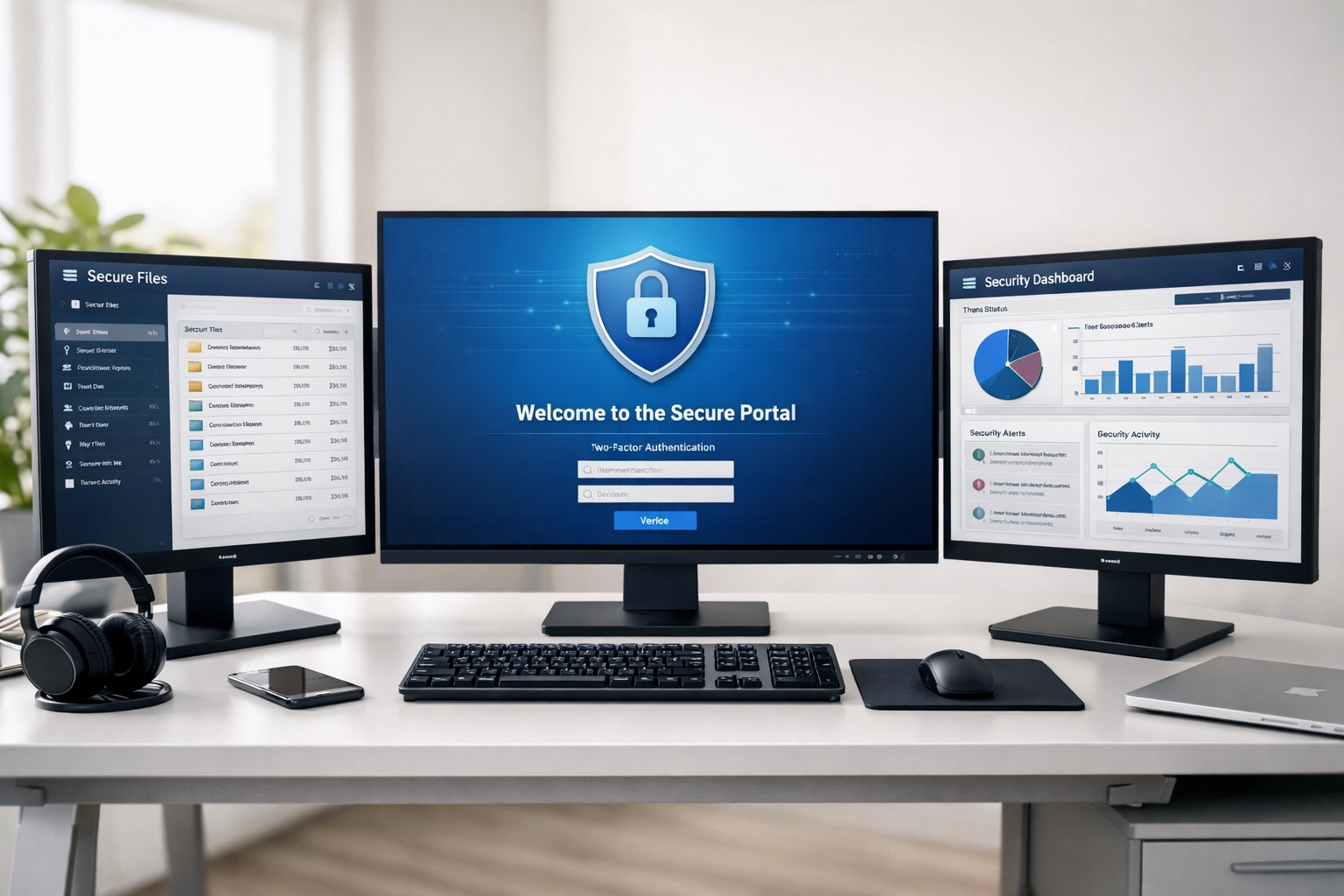
- Secure portal access for each preparer
- Automated format validation on upload
- Queue management system for pending transmissions
- Status tracking visible to uploading preparer
- Automated notifications on acceptance or rejection
Ohio mandates encryption standards under ORC 1354.02 for personal information transmission. Ensure file transfer systems meet state security requirements.
Transmission Management Systems
Track all transmission activity in centralized systems.
Essential tracking elements:
- Unique identifier for each return
- Preparer identification linked to return
- Transmission timestamp
- IRS acknowledgment file data
- Rejection codes and resolution status
- Retransmission records
Maintain separate tracking for federal and state transmissions. State acceptance does not guarantee federal acceptance.
Ohio-Specific Service Bureau Considerations
Ohio tax preparers without PTIN exemptions must register with the state under ORC 4745. Service bureaus transmitting Ohio returns should verify preparer compliance.
Ohio state returns require separate transmission through the Ohio Business Gateway. Service bureaus must maintain OBG credentials and account standing.
The Ohio Department of Taxation conducts separate examinations from IRS reviews. Maintain Ohio-specific documentation meeting ODT requirements under OAC 5703-7-18.
Financial Operations for Service Bureaus
Service bureau pricing typically includes per-return transmission fees. Structure pricing to cover actual transmission costs plus compliance overhead.
Cost components to consider:
- IRS application and annual fees for EFIN maintenance
- State transmission fees and gateway access costs
- E-file software licensing for transmission capabilities
- Staff time for return review and quality control
- Technology infrastructure and security systems
- Professional liability insurance covering third-party returns
Ohio requires separate state filing fees. Factor state costs into pricing for returns including Ohio transmissions.
Scaling Beyond 5,000 Returns
Operations exceeding 5,000 returns annually require dedicated compliance staff. Single-person oversight creates unacceptable risk exposure at this volume.
Implement role separation:
- Intake specialists handling onboarding and return receipt
- Compliance reviewers conducting quality checks
- Transmission specialists managing submissions and acknowledgments
- Support staff handling preparer communications and corrections
Document standard operating procedures for each role. Cross-train staff to prevent bottlenecks during peak season.
Suspension and Termination Protocols
Establish clear procedures for suspending or terminating preparer access to your service bureau.
Suspension triggers:
- IRS rejection rate exceeding 10% over 20-return sample
- Failure to respond to correction requests within 48 hours
- Identification of fraudulent returns in preparer's submissions
- Expiration of required credentials (PTIN, state license)
Immediate termination warranted for preparer EFIN suspension, criminal indictment related to tax preparation, or IRS prohibition from tax preparation activities.
Document all suspension and termination decisions. Provide written notice to affected preparers with specific reason for action.
Record Retention Requirements
Maintain complete documentation for all service bureau operations meeting IRS and state requirements.
Three-year federal retention applies to:
- Forms 8879 (IRS e-file Signature Authorization)
- Forms 8453 (U.S. Individual Income Tax Transmittal)
- Copies of all transmitted returns
- IRS acknowledgment files
Four-year retention for Ohio returns and related documentation under ORC 5747.122.
Store records in format permitting retrieval within reasonable timeframe during examination. Digital storage acceptable if protected against loss or corruption.