
Starting a career in tax preparation might seem overwhelming at first, but it's actually one of the most accessible paths into professional services. Unlike many other finance careers, you don't need a college degree or years of experience to begin helping people with their taxes. With the right training and certification, you can build a rewarding practice that makes a real difference in your clients' financial lives.
The tax industry offers excellent opportunities for both seasonal work and year-round practice growth. Whether you're looking for a side hustle during tax season or planning to build a full-time business, this step-by-step guide will walk you through everything you need to know to get started on the right foot.
Step 1: Understand the Role and Basic Requirements
Before diving into training programs, take time to understand what tax preparers actually do and the legal requirements involved. As a tax preparer, you'll guide clients through complex tax laws, file their returns accurately, and help them maximize deductions and credits they're entitled to receive.
The basic requirements are refreshingly straightforward: you must be at least 18 years old and have a high school diploma or equivalent. That's it for the fundamental qualifications. No college degree required, no extensive work experience needed.

However, it's important to understand the scope of what you can and cannot do. As a PTIN-only tax preparer, you can prepare and file tax returns, but you cannot represent clients before the IRS beyond the specific returns you prepared. If a client faces an audit or needs to appeal an IRS decision, they'll need to hire an Enrolled Agent, CPA, or attorney for representation.
This limitation doesn't diminish the value of your services: most tax preparation work involves helping people file accurate returns and claim appropriate deductions, which is exactly what you'll be trained to do.
Step 2: Complete Professional Tax Preparation Training
Quality training forms the foundation of your success as a tax preparer. You'll want to enroll in a comprehensive tax preparer course from a reputable provider. These courses are available online, at community colleges, and through professional tax preparation companies.
A good tax preparation course typically covers essential topics including:
- Form 1040 and all related schedules
- Federal and state tax codes
- Common deductions and credits
- Professional ethics and client confidentiality
- Data protection and security protocols
- Electronic filing procedures and requirements
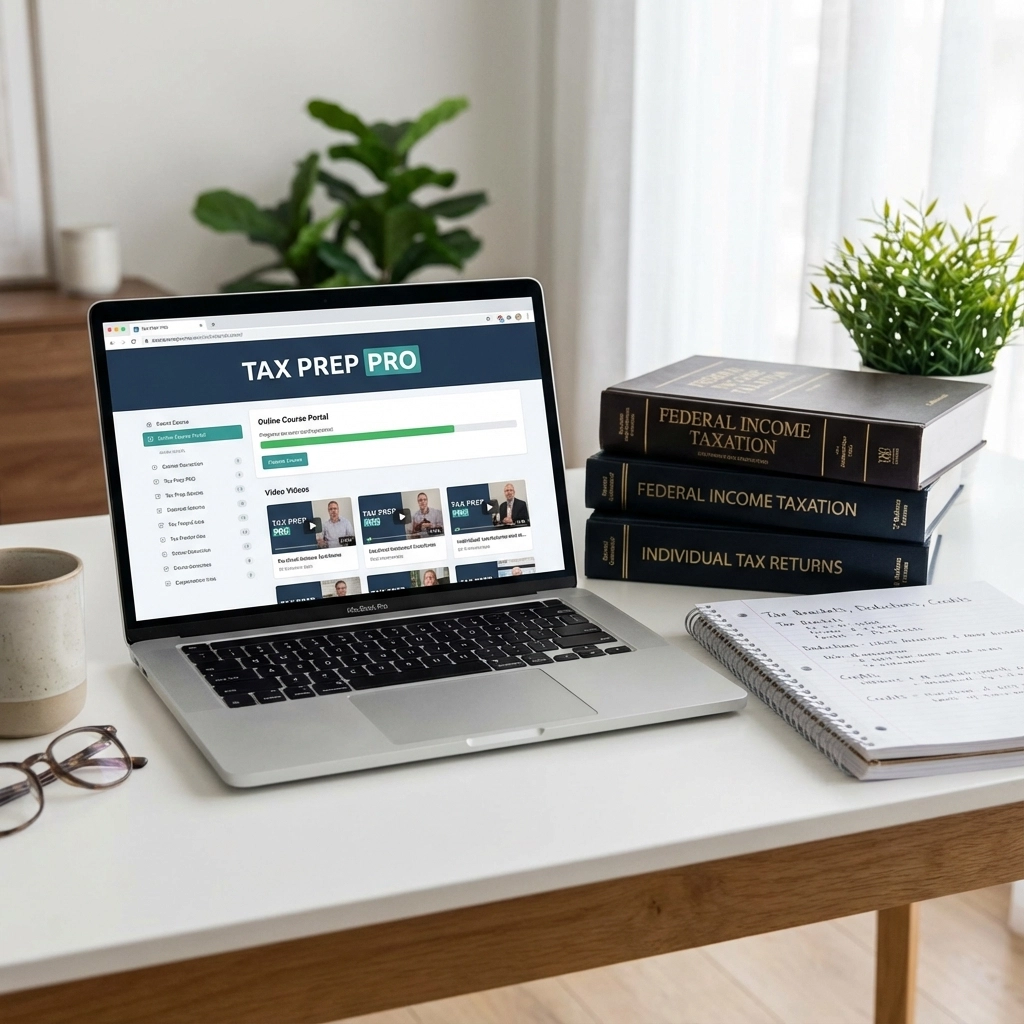
The IRS strongly recommends completing training through an accredited program. Course lengths vary by state requirements, with some states requiring as few as 15 hours of initial training and others requiring up to 80 hours. Most programs can be completed within a few weeks of part-time study.
When choosing a training program, look for courses that include practical, hands-on experience with actual tax scenarios. The best programs combine theoretical knowledge with real-world application, giving you confidence to handle various client situations from day one.
Many training providers also offer job placement assistance or connections to tax preparation firms looking for newly certified preparers, which can be incredibly valuable as you start your career.
Step 3: Obtain Your PTIN (Preparer Tax Identification Number)
The PTIN is your license to legally prepare and file tax returns for clients. This isn't optional: it's a federal requirement for anyone who prepares tax returns for compensation. The good news is that obtaining your PTIN is straightforward and inexpensive.
To get your PTIN, visit the IRS PTIN registration website and create an account. You'll complete a simple application that includes basic personal information and background details. The process typically takes just a few minutes online, and there's a small processing fee (currently around $30).
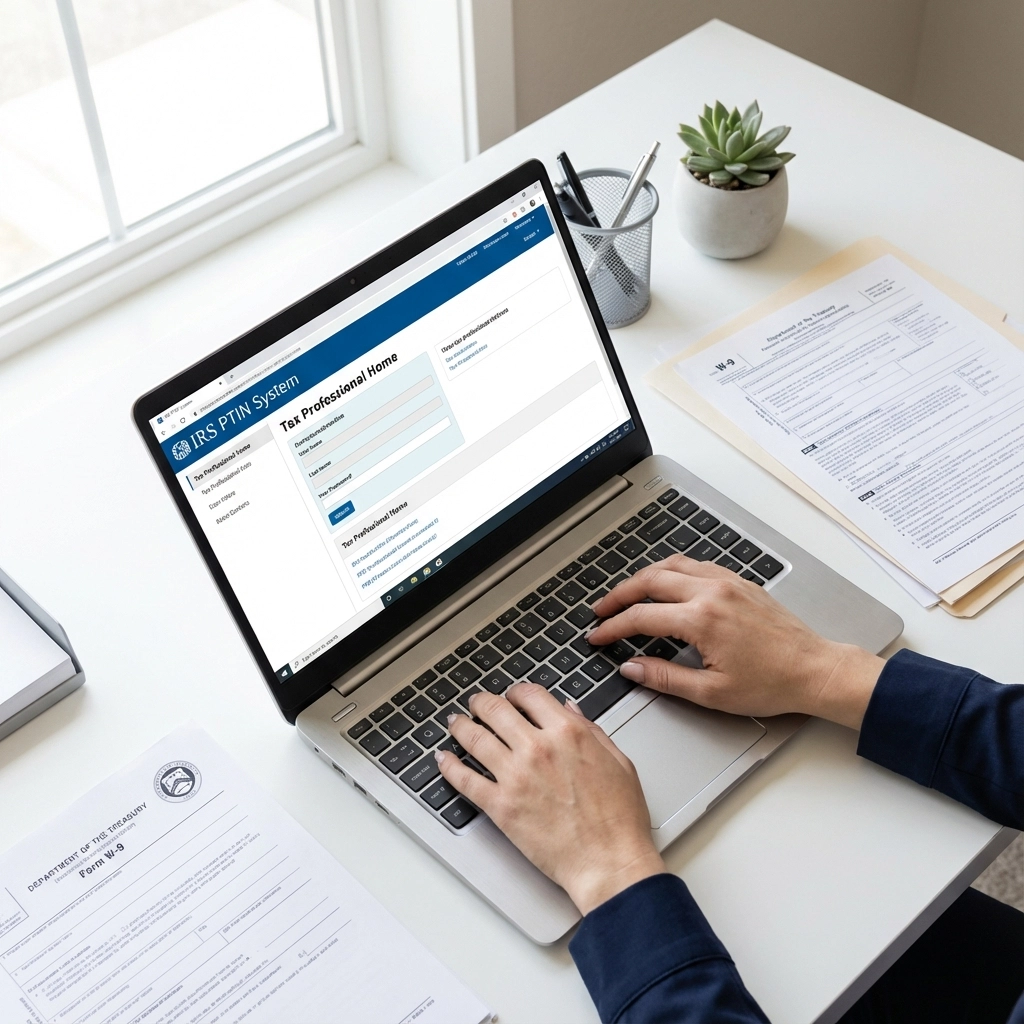
Your PTIN must be included on every tax return you prepare, and you'll need to renew it annually. The renewal process is just as simple as the initial registration, ensuring you stay in good standing with the IRS.
Keep your PTIN documentation safe and easily accessible. You'll need to reference this number frequently during tax season, and clients may ask to see your credentials to verify you're properly registered to prepare their returns.
Step 4: Meet Your State-Level Requirements
While federal PTIN registration allows you to prepare taxes anywhere in the United States, several states have additional requirements you must meet. These requirements vary significantly by state, so it's crucial to research your specific location's rules.
California requires registration with the California Tax Education Council (CTEC), including 60 hours of initial tax education, passing a qualifying exam, obtaining a $5,000 surety bond, and completing 20 hours of continuing education annually.
New York requires the New York Tax Preparer Registration Identification Number (NYTPRIN) if you file more than 10 returns annually. This includes annual registration and continuing education requirements.
Oregon mandates an Oregon Tax Preparer License, requiring an 80-hour course, passing a state exam, and completing at least 30 hours of continuing education each year.

If you're located in a state without additional requirements, your federal PTIN registration may be sufficient to begin practicing. However, always verify current requirements with your state's tax authority, as regulations can change.
The additional state requirements might seem burdensome, but they actually provide valuable protection for both preparers and clients. States with stricter requirements often have better-regulated markets and higher professional standards, which can benefit your practice's reputation.
Step 5: Build Your Practice and Consider Advanced Certifications
Once you've completed your basic certification, you're ready to start preparing taxes professionally. However, your learning journey doesn't end here. Building a successful practice requires ongoing education and potentially pursuing advanced certifications that set you apart from competitors.
Consider enrolling in the IRS Annual Filing Season Program (AFSP), a voluntary program that demonstrates your commitment to professional standards. Completing this program allows you to represent clients before the IRS for returns you prepared, giving you additional credibility.
For long-term career growth, you might pursue becoming an Enrolled Agent (EA). This credential requires passing a comprehensive three-part exam covering individual taxation, business taxation, and representation before the IRS. EAs have unlimited representation rights and can handle audits, collections, and appeals for any client.
To start accepting clients, you'll need professional tax preparation software. If you plan to file returns electronically (which most clients expect), you'll also need an Electronic Filing Identification Number (EFIN). The EFIN application requires fingerprinting and can take up to 45 days for approval, so apply early.
Consider partnering with established tax preparation firms initially. Many companies like TIG Tax Pros offer opportunities for newly certified preparers to gain experience while building their client base. This approach provides mentorship, established systems, and steady work while you develop your skills.
Marketing your services doesn't have to be complicated. Start with friends, family, and local community connections. Word-of-mouth referrals remain one of the most effective ways to grow a tax preparation practice. Focus on providing excellent service, and satisfied clients will naturally recommend you to others.
Your Path Forward
Starting a tax preparation career offers genuine opportunities for professional growth and financial success. The relatively low barrier to entry, combined with consistent demand for qualified preparers, makes this an attractive field for motivated individuals.
Remember that success in tax preparation comes from continuous learning and staying current with changing tax laws. The IRS regularly updates regulations, and clients rely on you to understand these changes and apply them correctly to their specific situations.
Take your time with each step of the certification process. Rushing through training or skipping important requirements can create problems later. Instead, focus on building a solid foundation of knowledge and professional practices that will serve you throughout your career.
The investment in proper training and certification pays dividends quickly. Most tax preparers can recover their initial education and certification costs within their first tax season, and experienced preparers often earn substantial income during the busy filing period.
Your journey as a certified tax preparer starts with that first step: choosing a quality training program and committing to professional excellence. The skills you develop and relationships you build will create opportunities for years to come.