

Slug: ultimate-guide-ero-operations-tax-business
Excerpt: Learn how to manage Electronic Return Originator (ERO) operations, from IRS compliance and EFIN security to software selection and tax business growth strategies.
Tags: ERO Operations, Tax Business, IRS Compliance, EFIN, Tax Software, Tax Professional Guide
Ultimate Guide to ERO Operations: Everything You Need to Succeed
An Electronic Return Originator (ERO) is the backbone of the modern tax preparation industry. As an ERO, you are authorized by the IRS to originate the electronic submission of tax returns. This guide outlines the operational requirements, compliance standards, and growth strategies necessary to run a professional tax office.
Understanding the ERO Designation
The ERO is a specific type of Authorized IRS e-file Provider. While many tax professionals are preparers, the ERO is the entity or individual responsible for the actual transmission of the data to the IRS. This role carries significant legal and professional responsibilities.
As an ERO, you must ensure that returns are filed timely and accurately. You are also responsible for verifying the identity of taxpayers and maintaining the integrity of the e-file system. For those who do not yet have an EFIN, it is possible to partner with an existing service bureau. You can learn more about this in our guide on ERO services without an IRS EFIN.
The IRS EFIN Application Process
To operate as an ERO, you must obtain an Electronic Filing Identification Number (EFIN). The application process is rigorous and involves several steps.
- Create an IRS e-services Account: You must register for an account on the IRS website. This requires identity verification through the current IRS-approved provider.
- Submit the e-file Application: Once registered, you must fill out the application to become an authorized e-file provider. You will select "Electronic Return Originator" as your provider type.
- Pass a Suitability Check: The IRS performs a background check. This includes a credit check, a tax compliance check, and a criminal background check. You must also submit fingerprints unless you are a "professional in good standing" (such as a CPA or Attorney) and provide proof of your professional status.
- Receive Your EFIN: Once approved, the IRS will issue your EFIN via your e-services account.
Operating without a valid EFIN or using someone else's EFIN improperly is a violation of IRS rules. If you are ready to scale and need robust tools, consider our unlimited tax software to handle high-volume filings.

IRS Compliance and Circular 230
Compliance is the most critical aspect of ERO operations. The IRS governs tax professionals through Treasury Department Circular No. 230. Key requirements for EROs include:
Due Diligence
EROs must exercise due diligence in preparing and filing returns. This is especially critical for returns claiming the Earned Income Tax Credit (EITC), Child Tax Credit (CTC), and American Opportunity Tax Credit (AOTC). Failure to meet due diligence requirements can result in significant penalties per return.
Record Keeping
You must retain copies of signed Forms 8879 (IRS e-file Signature Authorization) and all supporting documentation for three years. These records must be stored securely to prevent unauthorized access.
Safeguarding Taxpayer Data
The IRS requires EROs to comply with Publication 4557, Safeguarding Taxpayer Data. This includes implementing a written information security plan (WISP). Your plan must detail how you protect client information from cyber threats and physical theft.
Essential Infrastructure for EROs
A successful ERO operation requires more than just tax knowledge; it requires the right infrastructure.
Professional Tax Software
Your software choice determines your efficiency. A professional ERO needs a system that supports all federal and state forms, offers integrated bank products, and provides robust reporting. For smaller firms or those starting out, essential tax software may be the appropriate entry point.
Secure Client Portals
In a digital-first environment, mailing or emailing sensitive documents is no longer acceptable. Use secure portals for document exchange. This ensures compliance with Gramm-Leach-Bliley Act (GLBA) requirements.
Hardware and Networking
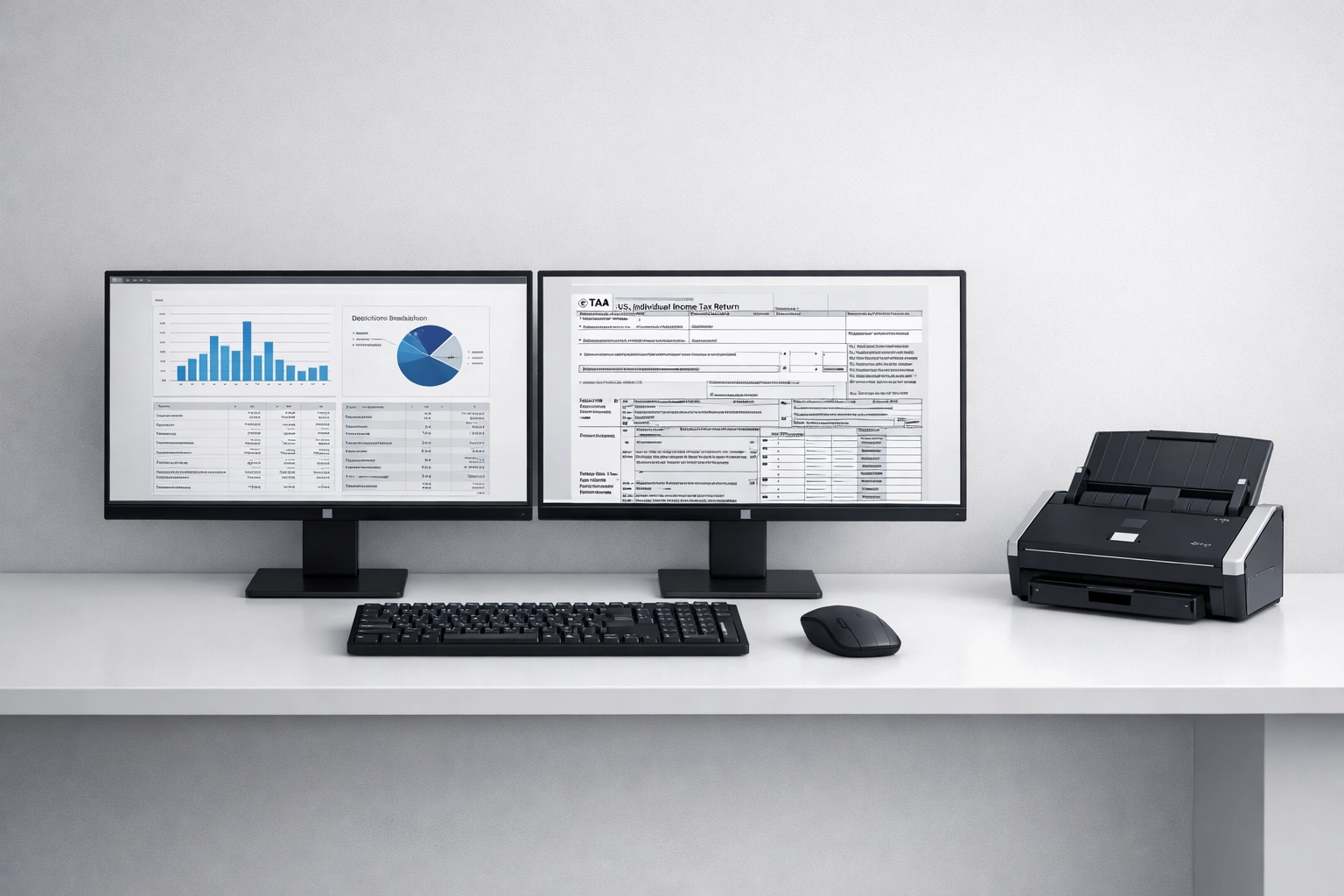
Invest in high-speed scanners, dual monitors for preparers, and a secure local network. Use a hardware firewall and enterprise-grade antivirus software to protect your EFIN and your clients' identities.

Managing Staff and Preparers
If your ERO operation employs other tax preparers, you are responsible for their conduct.
- PTIN Verification: Ensure every preparer has a valid Preparer Tax Identification Number (PTIN) for the current year.
- Continuing Education: Encourage or require staff to participate in the IRS Annual Filing Season Program (AFSP). This improves the accuracy of returns and reduces your operational risk.
- Supervision: The ERO is ultimately responsible for every return transmitted under their EFIN. Implement a review process where a senior preparer or the ERO reviews complex returns before transmission.
Scaling Your Tax Business
Once your ERO operations are stable, focus on growth. Growth requires a shift from "preparer" mindset to "business owner" mindset.
Service Bureau Models
Experienced EROs can grow by becoming a Service Bureau. This involves providing software and support to other tax offices. You can earn revenue through software sales and overrides on bank product fees. For information on joining an established network, see how to become a TIG Tax Pro.
Marketing and Client Acquisition
Develop a year-round marketing strategy. Do not wait until January to start looking for clients. Focus on niche markets, such as small business owners or specific industries, where you can provide high-value consulting services. For more ideas, read our quick tips to grow your tax business.
Diversifying Services
Offer year-round services like bookkeeping, payroll, and audit protection. This stabilizes cash flow and keeps you connected to your clients throughout the year, not just during tax season.
Audit Protection and Risk Management
Risk management is essential for long-term viability. An IRS office visit or an EFIN suspension can end your business.
- EFIN Security: Monitor your EFIN activity weekly through your IRS e-services account. Ensure the number of returns filed matches your internal records. If there is a discrepancy, report it to the IRS e-help desk immediately.
- Quality Control: Perform internal audits of your files. Ensure all Forms 8879 are signed and dated before transmission.
- Professional Liability Insurance: Obtain Errors and Omissions (E&O) insurance. This protects your business in the event of a mistake that leads to client losses.
ERO Operational Checklist
To ensure your office is ready for the upcoming season, follow this checklist:
- Renew PTINs for all staff.
- Update the EFIN application on IRS e-services (if address or key personnel changed).
- Review and update the Written Information Security Plan (WISP).
- Install and test the latest version of your tax software.
- Conduct due diligence training for all preparers.
- Verify that all hardware and security software are functioning correctly.
- Update your terms and conditions and privacy policy.
Technical Requirements for Electronic Filing
The IRS requires EROs to follow specific technical protocols for electronic filing. This includes using the Modernized e-File (MeF) system. Your software must be capable of generating XML files that meet IRS specifications.
Furthermore, you must ensure that the "Electronic Signature" process follows IRS guidelines. If you are using remote signatures, the software must utilize multi-factor authentication to verify the taxpayer’s identity before they can sign the return.

Conclusion of Operational Standards
Maintaining high operational standards distinguishes professional EROs from "ghost preparers" and fly-by-night operations. By focusing on compliance, security, and professional infrastructure, you build a practice that is both profitable and resilient.
Stay informed about changes in tax law and IRS requirements by regularly visiting the IRS website and our updates category.
For a deeper dive into certification requirements, refer to tax preparer certification in 2025.