
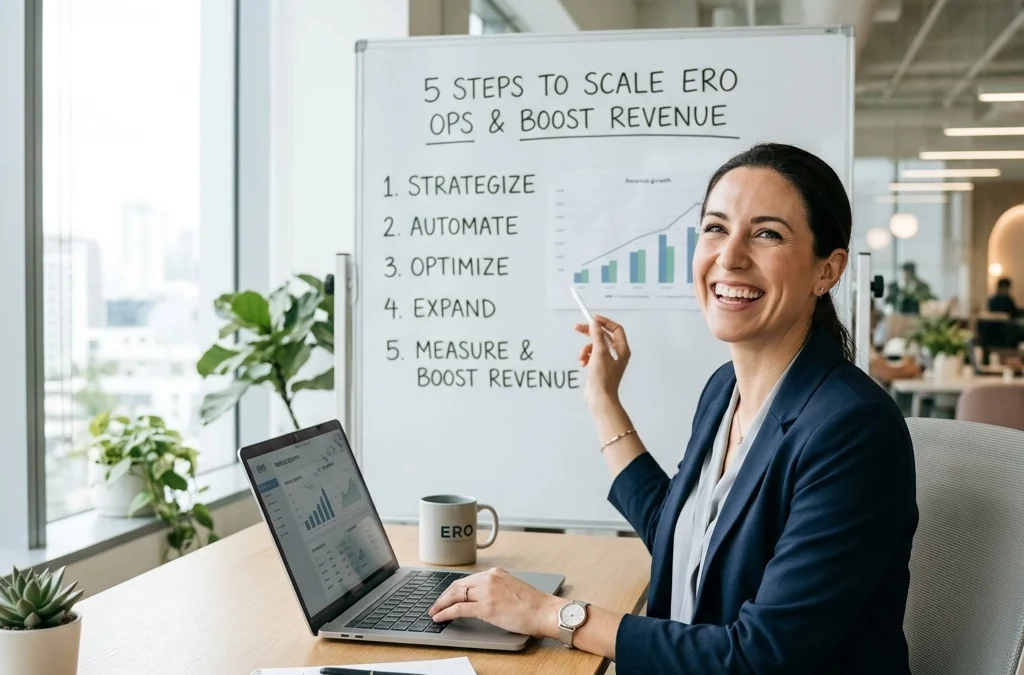
SEO Title: 5 Steps to Scale ERO Operations and Boost Tax Revenue
Slug: scale-ero-ops-boost-revenue-guide
Excerpt: Learn how to scale your Electronic Return Originator (ERO) business. Five proven steps for tax professionals to increase volume, efficiency, and total revenue.
Tags: ERO Operations, Tax Business Growth, Tax Software, Service Bureau, Revenue Growth, Professional Tax Prep
Scaling an Electronic Return Originator (ERO) operation requires a shift in mindset from being a technician: the person actually preparing the returns: to being a business architect. For many tax professionals, the ceiling of growth is often their own time. You can only file so many 1040s or 1120s before the hours in the day run out. To break through this plateau and significantly boost revenue, you must implement systems that allow your business to function and grow independently of your personal labor.
This guide outlines five critical steps to transition from a solo or small-scale ERO to a high-volume, multi-location, or service bureau-style operation.
Step 1: Upgrade to Professional-Grade Cloud Infrastructure
The first bottleneck in scaling ERO operations is usually the software. If you are still using desktop-bound software or platforms that do not allow for seamless multi-user collaboration, you cannot scale. Scaling requires a "work from anywhere" capability that enables you to hire remote preparers or manage multiple physical offices from a single dashboard.
By utilizing Essential Tax Software, EROs can gain access to the robust tools necessary for high-volume processing. Professional-grade software should offer:
- Multi-User Access with Granular Permissions: You need to be able to see what your preparers are doing without them having access to your sensitive firm-wide financial data.
- Real-Time Reporting: To scale revenue, you must know your numbers. You need to see how many returns are in "pending" status, how many are "accepted," and which offices are underperforming.
- Integrated Bank Products: Scaling revenue often relies on offering taxpayers the ability to pay their fees out of their refund. An integrated bank product partner is non-negotiable for an ERO looking to compete in the modern market.
Efficiency at the software level reduces the "time per return," which is your most valuable metric when scaling.

Step 2: Transition to the Service Bureau Model
The most significant jump in revenue for a successful ERO doesn't come from filing more individual returns; it comes from helping other tax professionals file theirs. This is known as the Service Bureau model. Instead of just being an ERO, you become a provider of software, training, and support to other EROs or sub-sites.
When you become a TIG Tax Pro partner, you can leverage this model to create recurring, passive revenue streams. As a Service Bureau, you can:
- Resell Software: Provide professional software to new or smaller tax businesses.
- Earn Add-on Fees: Collect a small technology or service fee on every return filed through your sub-sites.
- Provide Mentorship: Charge for your expertise in helping new EROs navigate the IRS application process and office setup.
By moving from a B2C (Business to Consumer) model to a B2B (Business to Business) model, your revenue potential is no longer tied to the number of clients walking through your door, but to the number of offices you support.
Step 3: Standardize and Automate Compliance Workflows
Scaling an ERO business increases your exposure to IRS audits and due diligence requirements. If your compliance process is manual or haphazard, scaling will lead to disaster. You must standardize your Due Diligence (Form 8867) procedures to ensure every return filed under your EFIN meets professional standards.
To boost revenue through efficiency, automate the following:
- Digital Document Collection: Use secure portals rather than physical paper. This allows for faster review and less physical storage cost.
- Audit Protection Integration: Offering audit protection services is a double-win. It provides your clients with peace of mind and generates an additional $50–$100 in revenue per return with virtually zero additional labor.
- Electronic Signatures: Eliminate the need for clients to come into the office twice. E-signatures allow you to finalize returns in minutes, freeing up your staff to move on to the next lead.
Standardization ensures that a return prepared by a junior staffer in a satellite office is as accurate as one prepared by you personally.

Step 4: Implement a Scalable Talent Acquisition Strategy
You cannot scale revenue without scaling your team. However, the biggest mistake EROs make is hiring full-time, year-round staff for a seasonal business. To maximize profit margins, you must build a flexible workforce.
- Remote Preparers: With cloud-based software, you can hire qualified preparers from lower-cost-of-living areas, reducing your overhead.
- Performance-Based Pay: Structure your compensation to reward volume and accuracy. This aligns the preparer’s goals with your revenue goals.
- Administrative Separation: Don't let your high-cost preparers spend time on low-value tasks like scanning documents or scheduling appointments. Hire lower-cost administrative assistants to handle the "prep for the prep," allowing your EROs to focus solely on the tax law and filing.
By optimizing your human capital, you lower the "cost of goods sold" (COGS) for every return filed, which directly increases your bottom-line profit.
Step 5: Diversify Revenue Streams with Ancillary Services
Relying solely on tax preparation fees limits your revenue potential. To truly scale, you should look at the client lifecycle. A tax client is a lead for several other professional services.
Consider adding these revenue-boosting services to your ERO operations:
- Year-Round Bookkeeping: Convert your seasonal tax clients into monthly recurring revenue (MRR) bookkeeping clients. This stabilizes your cash flow during the "off-season."
- Tax Planning and Resolution: Tax preparation is reactive; tax planning is proactive. Charging for high-level tax strategy for small business owners can command fees much higher than a standard 1040 filing.
- Entity Formation: Help your clients grow by assisting with LLC or S-Corp formations.
By expanding your services, you increase the "Lifetime Value" (LTV) of every client that walks through your door. It is always cheaper to sell a new service to an existing client than it is to acquire a brand-new one.

Conclusion: Executing the Growth Plan
Scaling your ERO operations is a marathon, not a sprint. It starts with the right foundation. If your current software or business model feels like it’s holding you back, it likely is. The transition from a local tax preparer to a national ERO powerhouse requires the right technology and the right partnerships.
To begin your journey toward a more profitable and scalable tax business, visit our shop to view the latest in professional tax tools or check out our blog for more advanced strategies on tax business management.
The tax industry is evolving. EROs who fail to automate and scale will find themselves working harder for less. Those who embrace systems, the Service Bureau model, and diversified revenue streams will dominate their local markets and beyond.