
SEO Title: Service Bureau Onboarding: Master Texas Filing Requirements
Slug: service-bureau-onboarding-texas-filing-requirements
Excerpt: Learn essential Texas filing requirements for service bureau onboarding. Complete guide for EROs and tax professionals starting operations in Texas.
Tags: Service Bureau, Texas Tax Filing, ERO Operations, State Compliance, Tax Business Infrastructure
Understanding Service Bureau Operations in Texas
Service bureaus provide electronic filing infrastructure for tax preparers without direct IRS EFIN authorization. Texas tax professionals use service bureaus to submit federal and state returns through an authorized Electronic Return Originator.
The onboarding process requires specific documentation and compliance with both federal IRS requirements and Texas Comptroller regulations. Tax professionals must complete registration steps before accessing transmission services.
Texas imposes unique requirements on service bureau operations that differ from other states. Understanding these requirements prevents filing delays and compliance issues during tax season.
Federal Registration Requirements
Service bureau relationships begin with IRS verification. Tax preparers must hold valid Preparer Tax Identification Numbers (PTINs) before establishing service bureau accounts.
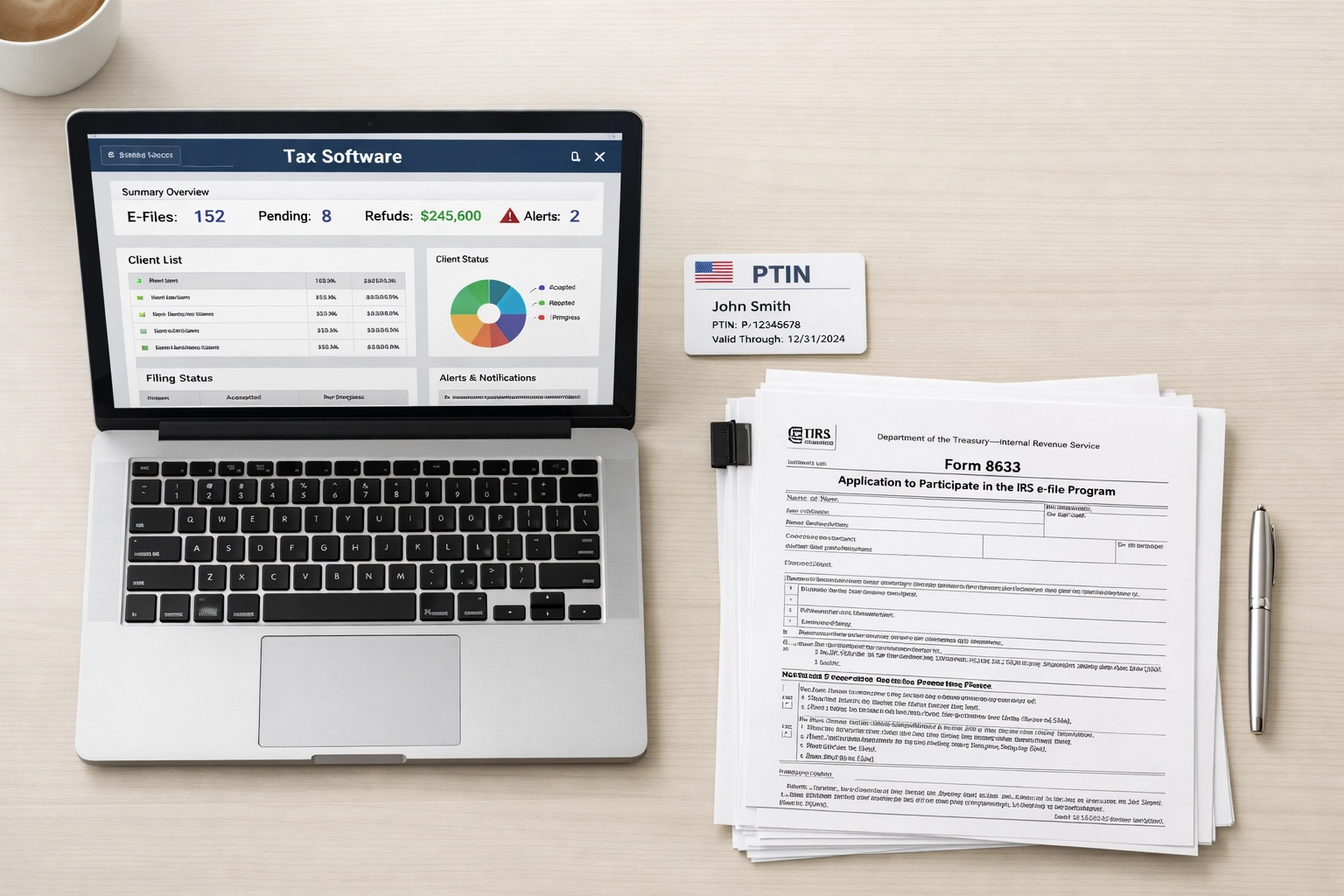
Submit Form 8633 Application to Participate in the IRS e-file Program through the service bureau portal. The service bureau verifies identity and conducts required background checks for all users accessing transmission systems.
Complete fingerprinting requirements through approved vendors. Service bureaus require FBI background check results before granting system access. Processing takes 4-6 weeks during peak enrollment periods.
Obtain professional liability insurance coverage meeting minimum thresholds. Most service bureaus require $50,000 to $100,000 coverage demonstrating financial responsibility and client protection.
Texas Comptroller Registration
Tax preparers filing Texas state returns through service bureaus must register with the Texas Comptroller of Public Accounts. This registration operates separately from federal IRS authorization.
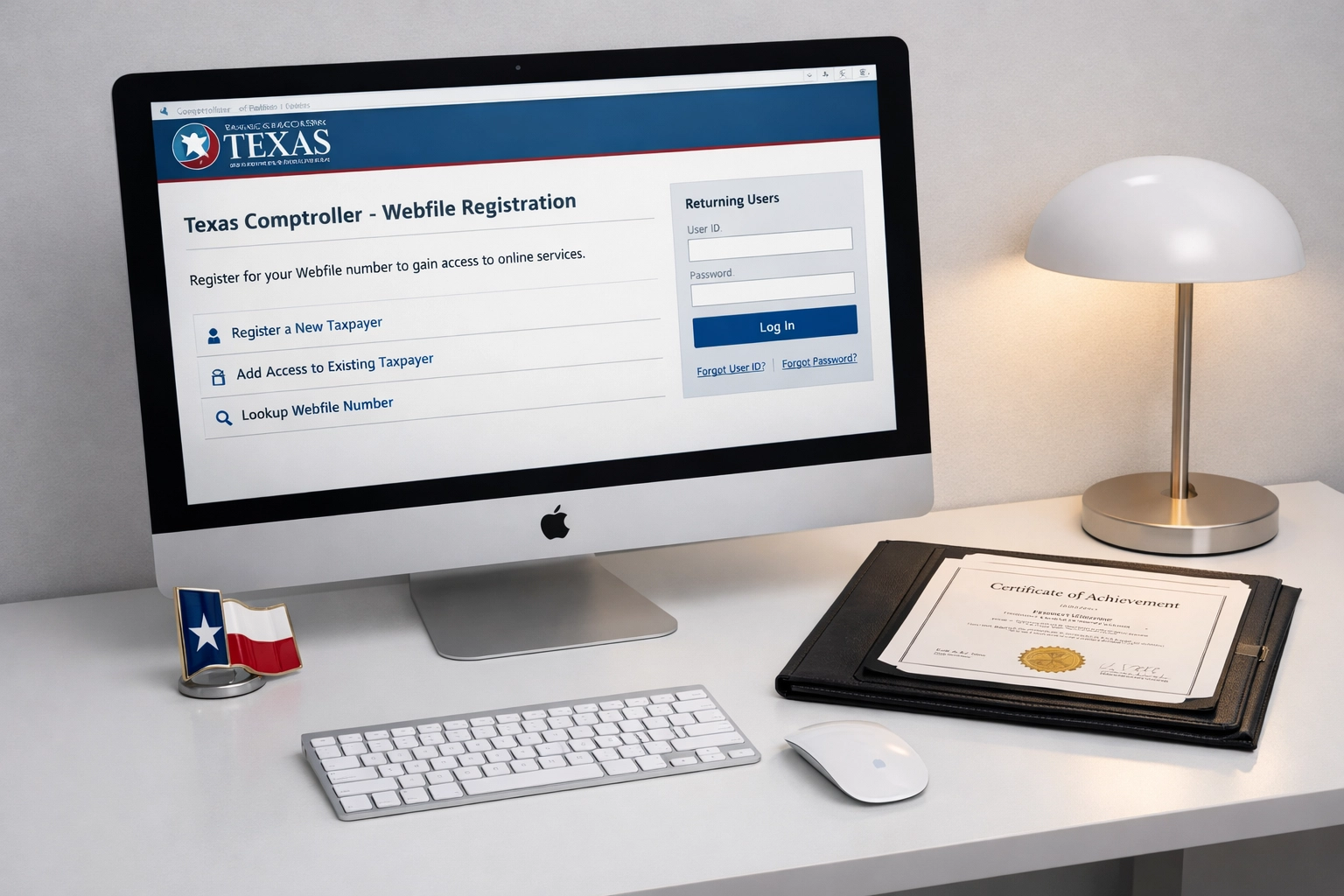
Create a Webfile account through the Texas Comptroller website. Complete the Tax Professional Registration application providing business entity information and professional credentials.
Texas requires disclosure of all business locations where tax preparation services occur. Update location information within 30 days of any changes to maintain active registration status.
Submit copies of professional certifications or credentials if applicable. Texas accepts CPA licenses, enrolled agent certifications, and attorney licenses as supporting documentation.
Service Bureau Platform Setup
Service bureaus provide proprietary software platforms for return transmission. Complete initial platform training before accessing production environments.
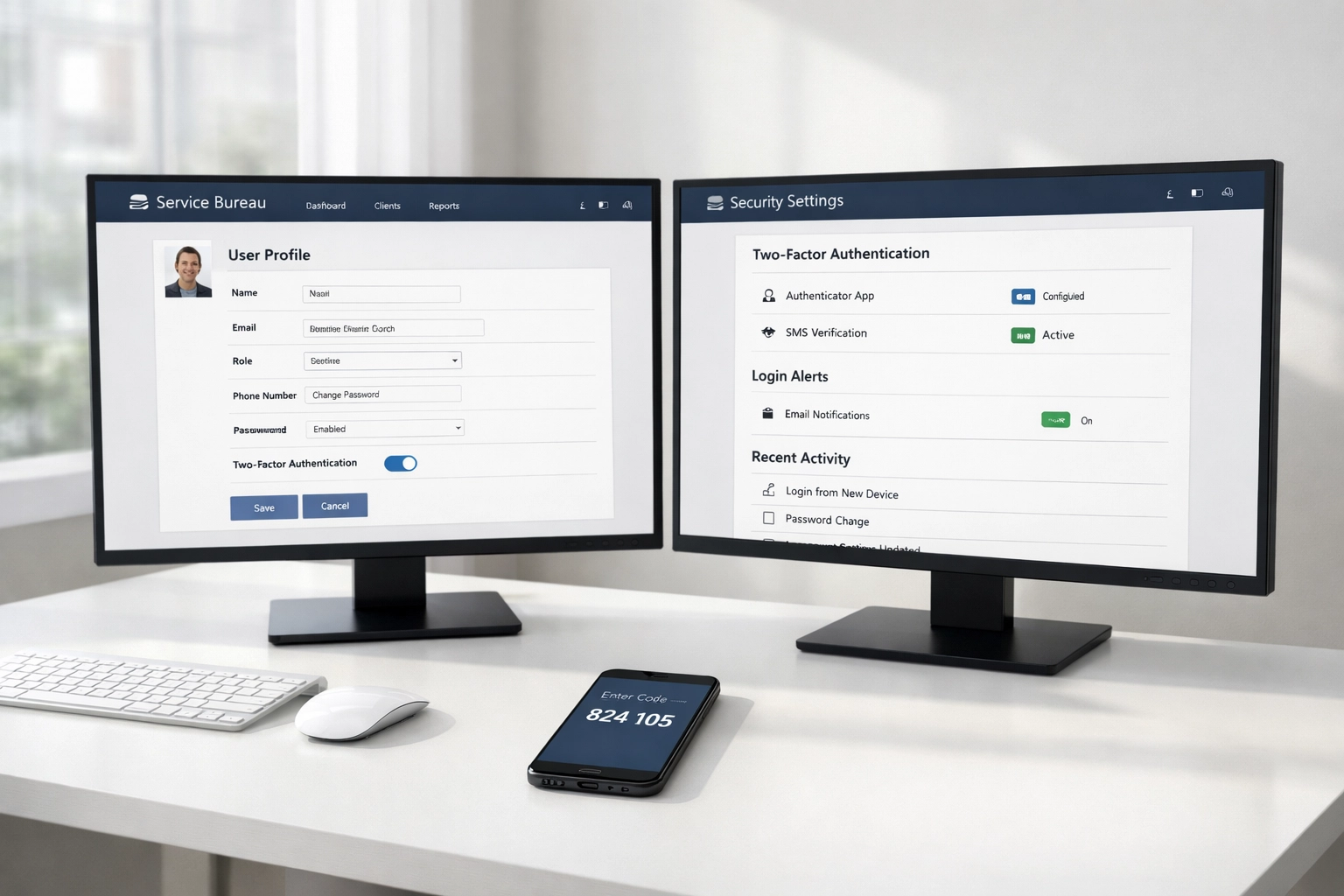
Configure user profiles with accurate preparer information. All PTIN holders preparing returns need individual login credentials with appropriate permission levels.
Set up Electronic Funds Withdrawal authorization for client refund processing. Service bureaus require bank account verification and test transactions before enabling EFW services.
Establish security protocols including two-factor authentication and password requirements. Service bureaus monitor login activity and flag suspicious access patterns.
Texas-Specific Filing Requirements
Texas franchise tax returns require separate filing credentials from individual income tax returns. Service bureaus provide distinct transmission channels for business entity returns.
Register for Texas franchise tax filing through the service bureau's state tax module. Complete the Texas Application for Registration and provide business entity documentation.
Verify Texas Taxpayer Identification Numbers for all business clients. Service bureaus reject returns with invalid or mismatched identification numbers.
Configure Texas sales tax filing capabilities if offering business tax services. Sales tax returns flow through different transmission protocols than franchise tax filings.
Document Verification Standards
Texas service bureau onboarding requires extensive documentation review. Prepare complete files before initiating the registration process.
Submit copies of business formation documents including articles of incorporation or LLC operating agreements. Texas requires verification of legal business entity structure.
Provide professional liability insurance certificates showing current coverage. Service bureaus verify policy numbers and coverage amounts directly with insurance carriers.
Upload identification documents for all authorized users. Texas requires government-issued photo identification matching PTIN registration information.
Compliance Testing Requirements
Service bureaus mandate compliance testing before granting production access. Complete test transmissions demonstrate technical capability and understanding of filing protocols.
Submit five test returns through the service bureau platform. Test returns must include federal and Texas state components with accurate preparer information.
Pass the service bureau's technical proficiency assessment. Assessments verify understanding of error code resolution and reject management procedures.
Complete state-specific training modules covering Texas filing requirements. Service bureaus track training completion and require annual refresher courses.
Bank Product Integration
Service bureaus offer refund transfer and refund advance products requiring additional authorization. Bank product integration adds complexity to onboarding procedures.
Complete separate applications for each bank product offering. Financial institutions conduct independent credit checks and background verifications for all applicants.
Establish segregated bank accounts for client fund management. Texas requires strict separation of business operating funds and client refund deposits.
Configure refund processing workflows within the service bureau platform. Set default options for refund delivery methods and fee deduction protocols.
Quality Control Procedures
Service bureaus implement quality control measures monitoring return accuracy and compliance. Understanding these procedures prevents account suspension or termination.

Review reject rate thresholds established by the service bureau. High reject rates trigger additional oversight and potential mandatory remedial training.
Maintain documentation supporting all filing positions and deductions. Service bureaus conduct random return reviews verifying adequate substantiation exists.
Respond promptly to service bureau inquiries regarding specific returns. Delayed responses result in transmission holds affecting client refund timing.
State Mandate Compliance
Texas imposes specific mandates on tax return preparers operating within state boundaries. Service bureau partnerships do not eliminate individual preparer compliance obligations.
Register with the Texas Secretary of State if operating as a business entity. Maintain active status through timely filing of annual reports and payment of franchise tax obligations.
Comply with Texas deceptive trade practices regulations. Service bureaus cannot shield preparers from liability arising from false advertising or misleading client communications.
Maintain client records according to Texas retention requirements. Electronic storage systems must meet security and accessibility standards under state law.
Annual Renewal Procedures
Service bureau authorization requires annual renewal. Establish calendar reminders preventing lapses in transmission capability during tax season.
Update PTIN registration before December 31 each year. Service bureaus disable accounts with expired PTINs on January 1.
Renew professional liability insurance coverage before policy expiration. Service bureaus receive automatic notifications of coverage lapses from insurance carriers.
Complete continuing education requirements maintaining professional credentials. Service bureaus verify active status of CPA licenses and enrolled agent certifications.

Technical Support Structure
Service bureaus provide tiered technical support for transmission issues and platform questions. Understanding support protocols reduces downtime during peak filing periods.
Access online knowledge bases for common error code resolution. Service bureaus document solutions to recurring technical problems in searchable databases.
Use chat support for real-time assistance with transmission errors. Chat support operates during extended hours throughout filing season.
Schedule phone consultations for complex technical issues requiring detailed troubleshooting. Phone support includes screen sharing capabilities for efficient problem resolution.
Cost Structure Analysis
Service bureau fees vary based on transmission volume and service level. Analyze cost structures before committing to specific provider relationships.
Compare per-return transmission fees across multiple service bureaus. Texas return transmission typically costs $2-5 per return depending on volume commitments.
Evaluate monthly platform fees and minimum usage requirements. Some service bureaus waive monthly fees for preparers exceeding volume thresholds.
Review bank product revenue sharing arrangements. Service bureaus retain portions of refund transfer and advance fees as compensation for platform access.
Transition Planning
Switching service bureaus mid-season creates operational disruption. Plan transitions during off-season periods allowing adequate testing and training.
Export client data from current service bureau platforms before initiating cancellation procedures. Verify data integrity and completeness before deleting source records.
Complete new service bureau onboarding at least 60 days before filing season. Allow buffer time addressing unexpected documentation requirements or technical issues.
Maintain dual platform access during transition periods. Overlap prevents service gaps if new platform implementation encounters delays.