

Starting a career as a tax professional offers stable income and consistent demand. Tax season runs from January through April, but preparation work spans year-round. This guide covers everything you need to know about becoming a tax professional in 2026.
Basic Requirements to Get Started
PTIN Registration
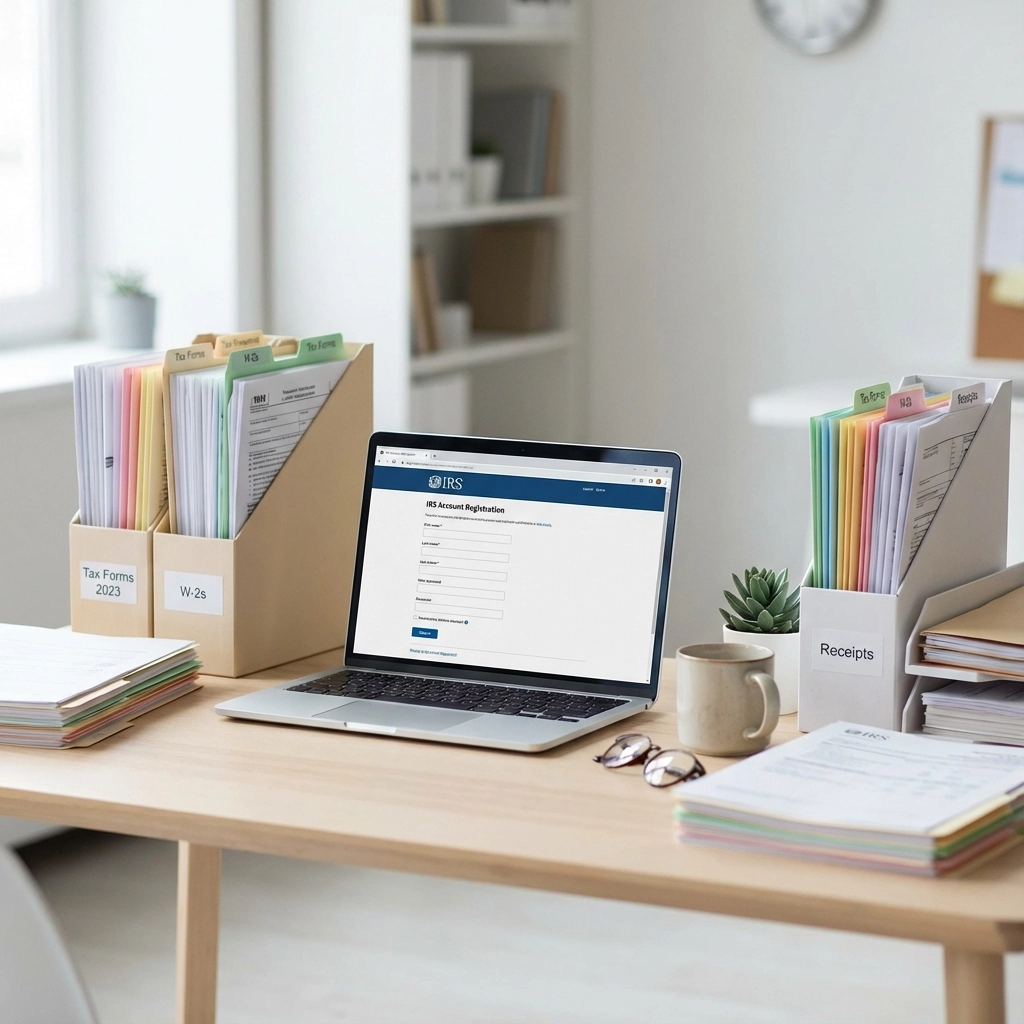
Every paid tax preparer must obtain a Preparer Tax Identification Number (PTIN) from the IRS. This applies to anyone preparing federal tax returns for compensation.
PTIN Requirements:
- High school diploma or GED
- Annual registration fee of $64.25
- Renewal fee of $63.00
Register directly through the IRS website. Processing takes 1-2 weeks.
Background Check
The IRS conducts a suitability check on all PTIN applicants. Certain criminal convictions may disqualify you from tax preparation work.
Certification Pathways
Registered Tax Return Preparer (RTRP)
The RTRP represents the entry-level IRS credential for tax professionals.
Requirements:
- Pass competency exam (120 questions, 2.5 hours)
- Exam fee: $116
- Complete 15 hours continuing education annually
- 3 hours: federal tax law updates
- 2 hours: ethics
- 10 hours: other federal tax topics
Exemptions: CPAs, Enrolled Agents, and attorneys skip the competency exam.
Certified Tax Professional (CTP)
The National Association of Certified Public Bookkeepers offers this credential for comprehensive tax knowledge.
Requirements:
- Complete CTP program courses
- Pass certification exam
- Demonstrate experience in payroll, individual tax, or business tax
- Follow Professional Code of Conduct
- Maintain 24 hours continuing education annually
Tax Planning Certified Professional (TPCP)
This credential focuses on tax strategy and planning, offered through The American College.
Requirements:
- 3 years financial services experience
- Complete three required tax strategy courses
- Score 70% or higher on each course
- Pass final exams (80% of grade)
- Follow Code of Ethics
- Complete program within 12 months

Step-by-Step Process
Step 1: Assess Your Background
Evaluate your current education and experience level. Determine which certification path aligns with your goals.
Step 2: Obtain Your PTIN
Register with the IRS for your PTIN. Complete the application accurately to avoid delays.
Step 3: Choose Your Certification
Select the appropriate credential based on your experience level and career objectives.
Step 4: Complete Required Education
Enroll in certification courses through approved providers. Many offer online options for flexibility.
Step 5: Pass Examinations
Schedule and take required exams. Most certifications require passing scores of 70% or higher.
Step 6: Apply for Certification
Submit your application with proof of education and exam completion.
Step 7: Begin Practice
Start accepting clients once you receive your credentials. Consider working for an established firm initially.

Common Mistakes to Avoid
Skipping Continuing Education
Tax laws change frequently. Failing to complete required continuing education puts your credentials at risk.
Inadequate Insurance Coverage
Professional liability insurance protects against errors and omissions claims. Never operate without proper coverage.
Poor Record Keeping
Maintain detailed records of all client interactions, tax returns prepared, and fees collected. The IRS may audit your practice.
Overestimating Initial Income
New tax professionals typically earn modest income during their first season. Plan accordingly and consider supplemental income sources.
Neglecting Ethics Training
Ethics violations can result in credential suspension or revocation. Take ethics requirements seriously.
Working Without Proper Setup
Establish proper business structure, accounting systems, and client management processes before accepting clients.

Essential Resources for Beginners
Education Providers
Approved PTIN Continuing Education:
- H&R Block Income Tax School
- Liberty Tax Service
- Jackson Hewitt Tax Service
- Drake Training
- Tax School Academy
Professional Organizations
National Association of Tax Professionals (NATP):
- Continuing education courses
- Professional resources
- Industry networking
National Society of Accountants (NSA):
- Tax preparation guidance
- Professional development
- Legislative updates
Software and Tools
Tax Preparation Software:
- Drake Tax
- ProSeries
- Lacerte
- TaxSlayer Pro
- TaxWise
Practice Management:
- Client organizers
- Document management systems
- Electronic filing capabilities
- Client portals

Reference Materials
Keep current versions of IRS publications, tax codes, and professional guides. Subscribe to tax newsletters for regular updates.
Timeline and Costs
Certification Timeline
RTRP: 2-4 months preparation plus exam scheduling
CTP: 6-12 months depending on prior experience
TPCP: Up to 12 months with structured coursework
Expected Costs
Initial Investment:
- PTIN registration: $64.25
- Certification courses: $500-2,000
- Examination fees: $100-300
- Software licensing: $1,000-5,000 annually
- Professional liability insurance: $200-500 annually
Income Expectations
First-year earnings typically range from $15,000-30,000 for part-time seasonal work. Full-time practitioners with established client bases earn $40,000-75,000 annually.
Building Your Practice
Starting Options
Employment: Work for established tax preparation companies like H&R Block or Jackson Hewitt for initial experience.
Franchise: Purchase a franchise for brand recognition and support systems.
Independent Practice: Start your own practice with complete control but higher initial investment.
Client Acquisition
Build your client base through referrals, local advertising, and professional networking. Focus on providing excellent service to generate repeat business.
Specialization Areas
Consider specializing in specific areas like small business taxes, non-profit organizations, or international tax matters to differentiate your services.
Next Steps
Register for your PTIN immediately to begin the process. Research certification programs and select one that matches your experience level and career goals. Consider starting with part-time seasonal work to gain experience before launching a full-time practice.
The tax profession offers stable career opportunities with consistent demand. Success requires dedication to ongoing education and maintaining high professional standards. Start your preparation now to be ready for the 2026 tax season.