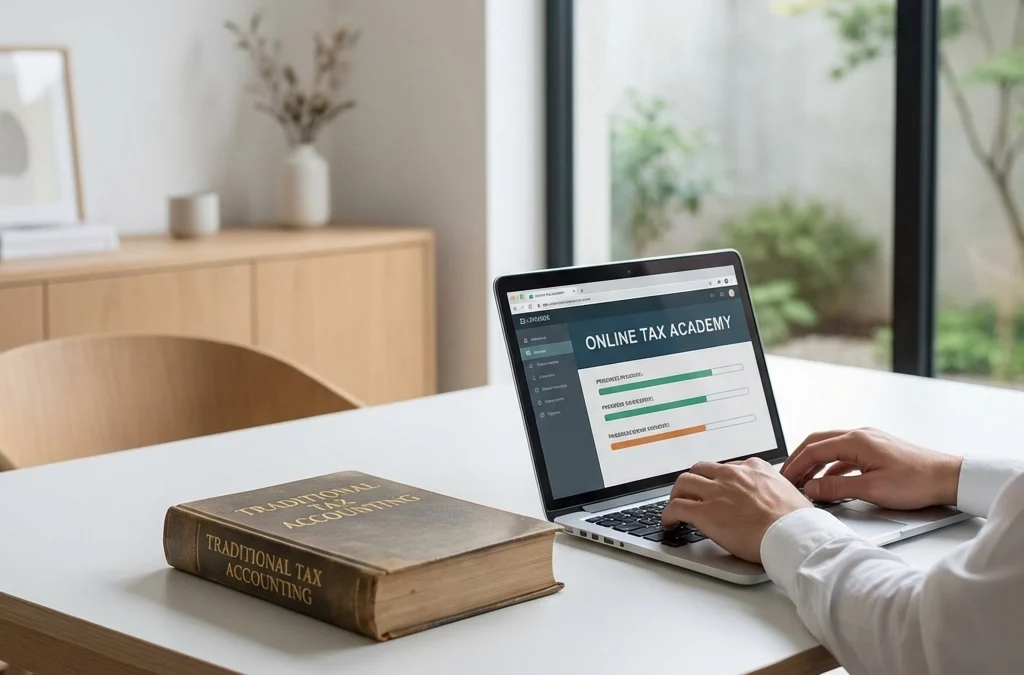
The tax preparation industry is experiencing a massive shift in how professionals get trained. With online courses flooding the market and traditional classroom settings becoming less common, many aspiring and seasoned tax preparers are wondering: Is classroom learning still relevant in 2026?
The short answer? It's complicated. While traditional in-person classroom tax courses aren't exactly "dead," they've definitely taken a backseat to digital alternatives. But before you write off classroom learning entirely, let's dig into what's really happening in tax education today.
The Current State of Tax Training in 2026
Based on current industry trends, the tax education landscape has shifted dramatically toward online and self-paced learning options. The Individual Tax Fundamentals course, for example, is now delivered as "eLearning" with a "self-study, self-paced" format, allowing users to "learn at anytime, from anywhere, without restrictions."

This flexibility has made online tax education incredibly attractive to both newcomers and experienced professionals looking to update their skills. Platforms like Coursera and specialized tax education providers have captured much of the market with on-demand webinars and self-study options.
However, instructor-led learning hasn't completely disappeared: it's evolved. Organizations like the National Association of Tax Professionals (NATP) now offer online workshops where "expert instructors lead" sessions combining "live video, instructional slides, downloadable course materials and real-time Q&A." These provide the interactive classroom experience many learners crave, just in a virtual format.
Why Traditional Classroom Tax Courses Still Matter
Despite the digital revolution, classroom tax courses offer unique advantages that online formats struggle to replicate:
Real-Time Problem Solving
When you're sitting in a classroom and encounter a complex tax scenario, you can immediately raise your hand and get clarification. That instant feedback loop is invaluable, especially for visual learners who benefit from seeing problems worked out on a whiteboard.
Peer Learning Opportunities
Classroom settings naturally foster networking and peer-to-peer learning. You'll meet other tax preparers facing similar challenges, which can lead to valuable professional connections and shared problem-solving strategies.
Structured Learning Environment
Some people simply learn better with the structure and accountability that comes with showing up to a physical classroom. It eliminates distractions and forces focus in ways that online learning sometimes can't.
Hands-On Practice
Many classroom tax courses include practical workshops where you can work through real tax returns with immediate instructor guidance. This tactile learning experience is harder to replicate online.
The Rise of Online Tax Education: Why It's Winning
Online tax training 2026 has several compelling advantages that explain its growing popularity:
Flexibility and Convenience
The biggest draw is obvious: you can learn whenever and wherever works for your schedule. This is particularly valuable for working professionals who can't commit to fixed class times.

Cost-Effectiveness
Online courses typically cost significantly less than their classroom counterparts. There's no need to factor in travel costs, parking, or time away from work.
Self-Paced Learning
Complex tax concepts can be reviewed multiple times until they stick. You can speed through familiar material and slow down for challenging topics: something impossible in a traditional classroom setting.
Updated Content
Online courses can be updated in real-time when tax laws change, ensuring you're always learning the most current information.
Variety of Learning Formats
Modern online tax education offers videos, interactive simulations, downloadable resources, and virtual workshops: often all in one package.
What the Numbers Tell Us
The Bureau of Labor Statistics projects the tax preparation career field to grow by 2.9% through 2026, indicating continued strong demand for trained professionals regardless of how they receive their education.
More telling is the rapid adoption of virtual learning formats. Even established organizations now offer events like TaxCon, described as a "virtual education event" where participants "interact with speakers, attendees and even exhibitors live throughout the event."
Recommendations for New Tax Preparers
If you're just starting your tax preparation journey, here's what you need to know:
Consider Your Learning Style
Are you someone who thrives with structure and face-to-face interaction? Traditional classroom tax courses might be worth seeking out. Do you prefer learning at your own pace with the ability to revisit material? Online options will serve you better.
Look for Interactive Elements
Whether you choose online or classroom learning, make sure your program includes opportunities to ask questions and get feedback. Passive learning rarely produces competent tax preparers.

Prioritize Practical Application
Theory is important, but you need hands-on experience with actual tax scenarios. Look for programs that include practice returns and real-world case studies.
Check for Continuing Education Credits
Make sure any program you choose offers the continuing education credits you'll need to maintain your certification.
Advice for Seasoned Tax Professionals
If you're an experienced tax preparer looking to update your skills:
Embrace Hybrid Learning
You don't have to choose just one format. Many professionals are finding success combining online courses for convenience with occasional in-person workshops for networking and complex topics.
Focus on Specialized Topics
Use online courses to quickly get up to speed on specific tax law changes or specialized areas like cryptocurrency taxation or international returns.
Leverage Professional Networks
Join online forums and virtual tax professional communities. They can provide the peer learning benefits traditionally found in classroom settings.
Stay Current with Technology
Many online tax education programs now include training on the latest tax software and digital tools: something traditional classroom courses often lag behind on.
The Hybrid Future of Tax Training
The reality is that neither traditional classroom tax courses nor purely online education has all the answers. The future of tax training in 2026 and beyond likely involves a hybrid approach that combines the best of both worlds.

Virtual classrooms with live instructors offer real-time interaction without geographical constraints. Blended programs that combine online study with periodic in-person workshops provide flexibility while maintaining hands-on learning opportunities.
Some innovative programs are even using virtual reality to simulate tax preparation scenarios, creating immersive learning experiences that weren't possible in traditional classrooms.
Making the Right Choice for Your Career
When deciding between classroom and online tax education, consider these factors:
- Your current skill level: Beginners often benefit more from structured classroom environments
- Available time: Online courses offer more flexibility for busy professionals
- Budget constraints: Online options are typically more cost-effective
- Learning preferences: Some people simply retain information better in person
- Networking needs: Classroom settings still offer superior networking opportunities
- Technology comfort: Online learning requires basic digital skills
Quick Takeaways
- Traditional classroom tax courses aren't dead, but they're becoming less common
- Online tax education dominates due to flexibility and cost-effectiveness
- Interactive virtual workshops bridge the gap between classroom and online learning
- New tax preparers should prioritize hands-on practice regardless of format
- Experienced professionals can benefit from hybrid learning approaches
- The future likely involves a blend of traditional and digital learning methods
The bottom line? Don't get caught up in choosing sides in the classroom versus online debate. Focus on finding quality education that matches your learning style, career goals, and practical constraints. Whether that's a traditional classroom, an online course, or a hybrid program, the most important factor is that you're continuously developing your tax preparation skills to serve your clients effectively.
The tax industry will continue evolving, and successful professionals will be those who adapt their learning strategies along with it.