
Understanding the Service Bureau Model for Georgia EROs
Service bureau operations allow Electronic Return Originators to process returns through third-party infrastructure without maintaining direct IRS connectivity. For Georgia-based EROs, this model provides immediate access to federal and state e-filing capabilities while reducing technical overhead.
The service bureau structure places your EFIN under another entity's software and transmission system. You maintain client relationships and ERO responsibilities while leveraging established filing infrastructure. This arrangement requires specific setup procedures and compliance checkpoints.

Georgia ERO Registration Requirements
Georgia requires separate state registration beyond federal ERO status. The Georgia Department of Revenue mandates distinct authorization for electronic filing of state returns, even when operating under a service bureau arrangement.
Your federal EFIN does not automatically grant Georgia e-filing privileges. Register through the Georgia Tax Center using your existing federal EFIN documentation. The state verification process typically completes within 5-7 business days during peak season.
Maintain copies of both federal and state ERO authorization letters. Service bureaus require these documents during onboarding to validate your filing authority.
Service Bureau Account Activation Process
Initial setup with a service bureau follows a standardized sequence. Provide your EFIN, state authorization numbers, and business documentation to the service bureau administrator. Most platforms require:
- Federal EFIN authorization letter
- Georgia state ERO credentials
- Business EIN documentation
- Principal ERO identification
- Professional liability insurance verification
The service bureau creates your account profile and links it to their transmission system. This process establishes your unique identifier within their infrastructure while maintaining your EFIN ownership.
Software Configuration and Access Rights
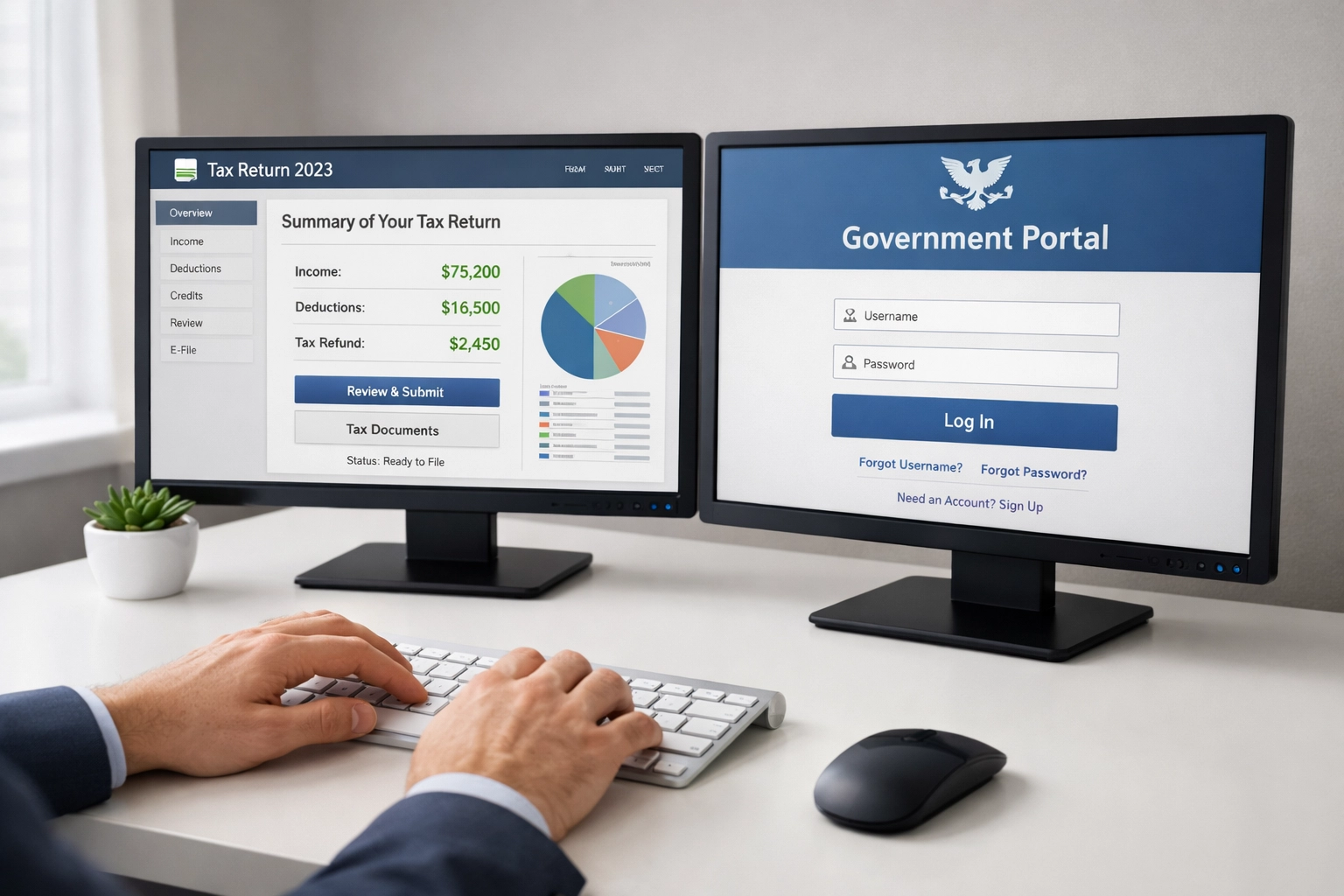
Service bureau platforms operate on two levels: preparation software and transmission protocols. Your account receives designated access to both components based on your service agreement terms.
Configure user permissions immediately after account activation. Designate which staff members can prepare returns, submit for transmission, or access client data. Georgia regulations require documented access controls for all personnel handling tax data.
Software configuration includes setting default preparer information, office location details, and state-specific filing preferences. Verify Georgia withholding tax integration settings before processing any state returns.
EFIN Management Under Service Bureau Operations
Your EFIN remains under your control even when using service bureau infrastructure. The service bureau acts as transmission intermediary but does not assume ERO responsibilities or liabilities.
Document the relationship between your EFIN and the service bureau's systems. IRS requires written service agreements detailing roles, responsibilities, and data handling procedures. Store these agreements with your ERO compliance documentation.
Service bureaus assign internal tracking numbers separate from your EFIN. These numbers facilitate their internal processing but do not replace your EFIN on submitted returns. Your EFIN appears on all returns filed through their system.
Georgia State Filing Integration
Georgia electronic filing requires specific data elements beyond federal requirements. Service bureaus maintaining Georgia connectivity must support:
- Georgia withholding tax schedules
- State-specific credits and deductions
- County tax integration where applicable
- Georgia estimated payment vouchers
- Extension filing protocols
Verify the service bureau's Georgia filing capabilities before processing returns. Not all service bureaus maintain current-year Georgia connectivity or support all form types.

Testing and Validation Procedures
Execute test transmissions before filing client returns. Service bureaus provide testing environments that simulate actual transmission without submitting to IRS or state systems.
Georgia recommends testing with representative return types including:
- Standard resident returns with state withholding
- Non-resident returns with Georgia-source income
- Part-year resident scenarios
- Returns claiming Georgia-specific credits
- Extensions and amended returns
Document test results and resolution of any transmission errors. Failed test transmissions indicate configuration issues requiring correction before live filing.
Acknowledgment Processing and Monitoring
Electronic acknowledgments confirm successful transmission to IRS and Georgia systems. Service bureaus route acknowledgments to your account based on your EFIN identifier.
Monitor acknowledgment queues multiple times daily during peak season. Georgia typically generates acknowledgments within 24-48 hours of submission. Federal acknowledgments arrive within 24 hours for most returns.
Rejection codes require immediate attention. Common Georgia rejection scenarios include mismatched taxpayer identification numbers, duplicate filing attempts, or incomplete state schedules. Service bureaus provide rejection code libraries with resolution procedures.
Data Security and Retention Requirements
Service bureau arrangements create shared data custody. You maintain primary responsibility for client data security despite third-party infrastructure involvement.
Verify the service bureau's security certifications and data handling practices. Required protections include:
- Encryption for data transmission and storage
- Multi-factor authentication for account access
- Regular security audits and penetration testing
- Documented data breach response procedures
- Client data segregation protocols
Georgia law requires tax preparers to maintain client records for four years. Clarify data retention responsibilities in your service bureau agreement. Determine whether the service bureau stores data beyond the current filing season and establish procedures for data retrieval or destruction.

Ongoing Compliance Monitoring
Service bureau relationships require continuous compliance verification. The IRS can audit service bureau operations and request documentation from participating EROs.
Maintain records of all returns filed through service bureau infrastructure. Track submission dates, acknowledgment receipts, and any error corrections. These records support your ERO due diligence requirements.
Review service bureau performance metrics quarterly. Monitor transmission success rates, acknowledgment timing, and technical support responsiveness. Document any service issues and their resolution.
Cost Structure and Fee Management
Service bureau arrangements typically involve per-return fees or subscription models. Georgia returns may incur separate charges from federal returns based on state filing complexity.
Calculate total filing costs including:
- Software access fees
- Federal transmission charges
- Georgia state filing fees
- Reject resubmission costs
- Technical support fees
Compare service bureau costs against direct filing infrastructure expenses. Service bureau models eliminate transmission equipment costs and software maintenance but add per-return processing fees.
Transition Planning for Season-End
Service bureau accounts require annual renewal and recertification. Georgia ERO credentials expire annually and need reauthorization before each filing season.
Begin renewal procedures 60 days before season start. Submit updated documentation to both Georgia Department of Revenue and your service bureau provider. Processing delays can prevent timely season opening.
Archive previous season data before system resets. Service bureaus may purge old season data or move it to separate storage. Retrieve necessary records for pending audits or amended return preparation.
Moving to Next Steps
Service bureau onboarding establishes your Georgia filing infrastructure within days rather than weeks. The model suits EROs prioritizing rapid deployment over complete system ownership.
Successful service bureau operations depend on thorough initial configuration and ongoing compliance monitoring. Document all setup procedures and maintain organized records of service agreements, authorization letters, and transmission logs.
Georgia-specific requirements add complexity to multi-state operations. Verify state filing capabilities before committing to service bureau relationships.