
Most tax businesses hit a ceiling between 500-1,000 returns annually. The problem isn't capacity. It's infrastructure.
ERO operations require systems that support volume without proportional headcount increases. This means standardized workflows, automated compliance checks, and repeatable processes. Below are ten operational gaps that prevent scaling and their solutions.
1. Manual Client Intake Processes
Problem: Paper forms, email chains, and phone tag create bottlenecks. Each new client requires 30-45 minutes of administrative work before tax preparation begins.
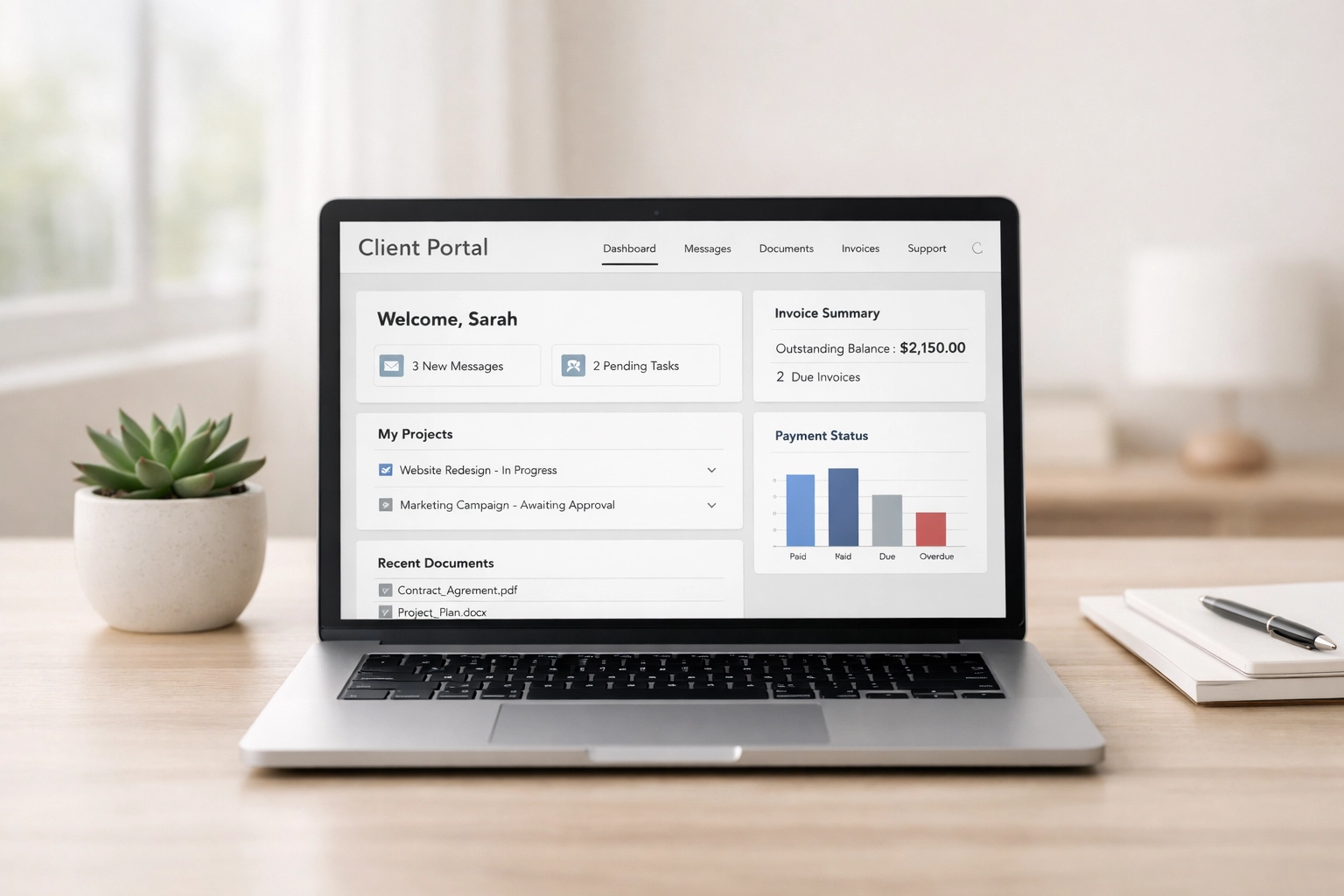
Fix: Implement digital intake portals with automated document collection. Client provides information once. System routes data directly to tax software. Eliminates redundant data entry and reduces intake time to under 10 minutes.
2. No Standardized Workflow Documentation
Problem: Each preparer operates differently. Training new staff takes weeks. Knowledge exists only in individual heads, not in documented processes.
Fix: Create written standard operating procedures for every client scenario. Document decision trees for common situations. New preparers follow checklists, reducing training time by 60-70%.
3. Missing Service Bureau Strategy
Problem: Operating as a standalone ERO limits growth to your EFIN capacity. Adding preparers doesn't scale when transmission infrastructure maxes out.
Fix: Partner with established service bureaus for overflow processing. Maintain ERO status for direct clients while leveraging bureau infrastructure for volume expansion. Reduces capital requirements and compliance overhead.
4. Outdated Software Infrastructure
Problem: Legacy tax software built for desktop operation. No cloud access. Limited integrations. Preparers work in isolation.
Fix: Migrate to cloud-based tax platforms with API integrations. Enable remote work capabilities. Connect tax software to CRM, e-signature tools, and payment processing. Reduces software costs per return while increasing preparer flexibility.

5. Inadequate State Compliance Tracking
Problem: State requirements vary significantly. Ohio requires specific ERO registrations distinct from federal credentials. Missing state deadlines creates liability exposure and operational delays.
Fix: Maintain compliance calendar with state-specific deadlines. Ohio EROs must track Ohio Department of Taxation registration renewals, state e-file mandates, and preparer tax identification number (PTIN) requirements. Automate renewal reminders 90 days before expiration dates.
6. Inefficient Bank Product Management
Problem: Refund transfer and advance loan products require separate agreements with multiple providers. Each bank product has distinct requirements, fee structures, and rejection protocols.
Fix: Consolidate to one or two bank product providers with established ERO relationships. Negotiate volume-based fee structures. Implement automated reject tracking to identify patterns and reduce bank product failures.
7. No Quality Control Framework
Problem: Returns go out without systematic review. Errors discovered post-transmission create rework cycles and damage client relationships.
Fix: Build tiered review process. Junior preparers get 100% review. Senior preparers operate on spot-check basis. Use software-based error detection before human review. Reduces reject rates by 40-50%.

8. Single Point of Failure Dependencies
Problem: Critical knowledge concentrated in one person. Owner handles all bank product issues. Senior preparer manages all complex returns. Business stops when they're unavailable.
Fix: Cross-train staff on every operational function. Document troubleshooting procedures for common issues. Rotate responsibilities quarterly to build organizational depth.
9. Manual Transmission and Acknowledgment Tracking
Problem: Checking acknowledgments, monitoring reject reports, and tracking transmission status consumes hours daily during peak season.
Fix: Configure automated acknowledgment monitoring with alert systems for rejects. Dashboard view of all return statuses. Preparers receive notifications only for items requiring action. Saves 10-15 hours weekly during season.
10. Lack of Performance Metrics
Problem: No data on returns per preparer, average completion time, or reject rates. Cannot identify bottlenecks or allocate resources effectively.
Fix: Track key metrics: returns per labor hour, first-time acceptance rate, average days to complete, and revenue per client. Review weekly during tax season. Adjust staffing and workflows based on data patterns.

Implementation Priority
Address items 2, 7, and 10 first. Standardized workflows, quality control, and metrics create foundation for other improvements. These require minimal capital investment but generate immediate operational gains.
Items 3, 4, and 6 require vendor relationships and software changes. Plan these for off-season implementation with 90-day testing periods before next filing season.
State compliance tracking (item 5) operates on fixed calendar deadlines. Ohio EROs should verify current registration status and set calendar reminders before addressing other operational items.
Ohio-Specific Considerations
Ohio imposes additional ERO requirements beyond federal standards. Ohio Department of Taxation requires separate state e-file registration. Ohio preparers must maintain PTIN registration and complete Ohio-specific continuing education requirements.
OhioEROs processing over 10 returns annually must register with the Ohio Department of Taxation's e-file program. Registration renewal occurs annually. Missing renewal deadlines prevents state return transmission and creates compliance violations.
Track Ohio state law changes affecting ERO operations. Recent Ohio legislation modified preparer penalties and expanded e-file mandates for commercial preparers. Maintain current knowledge of Ohio Revised Code sections 5747.122 and 5703.057 governing ERO operations.

Capital Requirements
Most scaling improvements require time investment rather than capital expenditure. Workflow documentation, quality frameworks, and metrics tracking cost under $2,000 in software tools.
Software infrastructure upgrades range from $3,000-$15,000 annually depending on volume and feature requirements. Service bureau relationships typically operate on per-return fee basis with no upfront costs.
Bank product consolidation may require changing provider agreements. Review termination clauses in current contracts. Some providers impose season-end deadlines for contract changes.
Scaling Timeline
Operational improvements implemented in off-season produce results in subsequent tax season. Starting infrastructure changes in March-April positions ERO for improved operations by January.
Document current processes May-June. Implement new workflows July-September. Test systems October-November. Train staff December. Execute improved operations January-April.
Most EROs achieve 30-40% capacity increases in first season after implementing standardized operations. Year two typically shows additional 20-25% improvement as refined processes mature.
Scaling ERO operations requires systematic operational improvement rather than simply adding preparers. Infrastructure supporting 1,000 returns differs fundamentally from infrastructure supporting 100 returns. Build systems before hiring headcount.