
SEO Title: Service Bureau Operations Peak Season Guide for Tax Pros
Slug: service-bureau-operations-peak-season-guide
Excerpt: Master service bureau workflows, team coordination, and compliance protocols during peak tax season. Strategic guidance for EROs managing multiple preparers.
Tags: Service Bureau, Tax Professional Operations, ERO Management, Peak Season, Workflow Management, Ohio Tax
Service Bureau Infrastructure Requirements
Service bureau software differs from standard tax preparation tools. The infrastructure supports multiple preparers, centralized workflows, and scalable operations. During peak season, this framework handles increased volume without degrading performance.
Core infrastructure components include centralized return management, preparer assignment protocols, and quality control checkpoints. Systems must process returns efficiently while maintaining accuracy standards across all preparers.
Resource allocation becomes critical between January and April. Service bureau operations require advance capacity planning based on historical volume data and projected client loads. System performance monitoring ensures infrastructure scales appropriately as daily return counts increase.
Workflow Management Systems
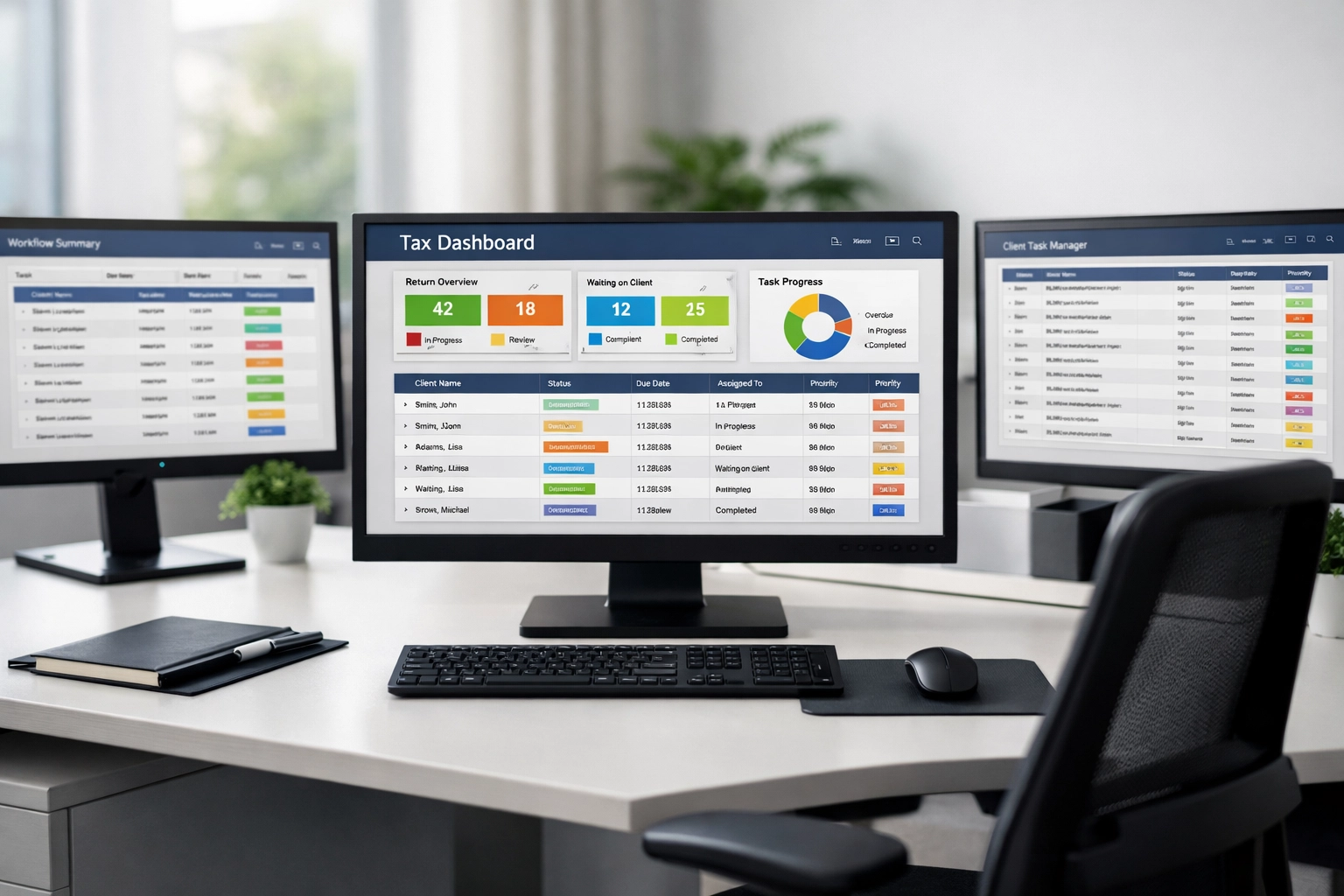
Efficient workflow management separates functional service bureaus from overwhelmed operations. Assign returns based on preparer expertise, current workload, and complexity level. Track return status through standardized stages: intake, preparation, review, filing, and completion.
Implement return prioritization protocols. Deadline-driven assignments ensure high-priority returns receive immediate attention. Simple returns move through rapid processing channels while complex situations receive appropriate review time.
Monitor bottlenecks in real-time. When returns accumulate at specific workflow stages, redistribute resources or adjust procedures. Peak season demands continuous workflow optimization.
Quality control checkpoints occur at defined workflow stages. Initial review catches data entry errors before preparer time investment increases. Final review ensures compliance before electronic submission. This staged approach maintains quality standards while processing volume efficiently.
Technical Support Operations
Technical issues during peak season directly impact revenue. Service bureau operations require immediate access to technical resources. Standard support ticket systems create unacceptable delays when software malfunctions occur during critical filing periods.
Real-time support channels: phone, chat, or direct messaging: minimize downtime. Technical experts familiar with service bureau configurations resolve issues faster than general support teams. Support staff should access your system remotely when necessary to diagnose and correct problems directly.
Maintain documented protocols for common technical issues. When software updates create unexpected behavior or transmission errors occur, reference materials enable quick resolution without support escalation. Create internal documentation based on recurring issues specific to your operation.

Team Training Protocols
Peak season training differs from annual software updates. Focus training on high-volume return types, common error patterns, and efficient data entry methods. Preparers must execute standard procedures without referring to documentation.
Conduct practice sessions using sanitized prior-year returns. Measure preparation speed and accuracy. Identify specific skill gaps before peak volume arrives. Address deficiencies through targeted training rather than comprehensive software reviews.
Software updates require immediate training deployment. New IRS requirements, state law changes, or form modifications necessitate rapid knowledge transfer. Brief, focused training sessions during peak season maintain operations without extended downtime.
Monitor preparer performance metrics throughout peak season. Error rates, preparation times, and review frequency indicate training needs. Deploy corrective training immediately when performance patterns emerge.
Ohio-Specific Service Bureau Considerations
Ohio EROs must register with the Ohio Department of Taxation separately from federal registration. Service bureaus filing Ohio returns require both federal EFIN approval and Ohio vendor authorization. Verify all preparers have appropriate Ohio credentials before peak season begins.
Ohio requires specific disclosure statements on electronically filed returns. Service bureau software must generate compliant Ohio acknowledgment forms. Review Ohio-specific form requirements annually as the state updates regulations independently from IRS schedules.
Ohio municipal tax complexity requires specialized knowledge. Service bureaus serving Ohio clients must handle multiple municipal return formats and varying filing requirements. Train preparers on common Ohio municipal situations or assign these returns to specialists familiar with regional requirements.

Electronic Filing Infrastructure
Service bureau electronic filing differs from individual preparer transmission. Multiple preparers submit returns through centralized EFIN credentials. This structure requires careful transmission management and error tracking.
Implement transmission schedules that prevent system overload. Batch submissions during off-peak hours when IRS systems experience lower traffic. Monitor rejection rates and resolve issues before subsequent transmissions.
Maintain backup transmission capabilities. When primary electronic filing channels experience issues, alternative submission methods prevent deadline failures. This may include secondary software platforms or manual transmission protocols.
Track acknowledgment receipt systematically. Service bureau operations must confirm IRS acceptance for every submitted return. Automated monitoring systems alert staff when acknowledgments exceed normal processing times.
Compliance Framework
Service bureau operations face distinct compliance requirements. IRS regulations mandate specific recordkeeping, disclosure requirements, and quality standards for entities filing on behalf of multiple preparers.
Document preparer assignments for each return. Federal regulations require clear identification of the individual primarily responsible for return preparation. Service bureau systems must maintain this information and include it in electronically filed returns.
Implement quality review procedures that meet IRS standards. Returns require review by someone other than the original preparer when the service bureau employs multiple tax professionals. Document review completion and maintain records demonstrating compliance with quality control protocols.

Client Communication Systems
Peak season client communication differs from off-season interaction. Implement systems that provide status updates without consuming preparer time. Automated notifications inform clients when returns reach specific workflow stages.
Establish clear communication protocols for missing information. When returns cannot proceed without additional documentation, standardized requests expedite client responses. Template communications reduce preparation time while maintaining professionalism.
Manage client expectations regarding processing timelines. Peak season volume affects completion schedules. Transparent communication about realistic timeframes reduces client anxiety and support inquiries.
Data Security Protocols
Service bureau operations handle sensitive information for numerous clients. Security protocols must prevent unauthorized access while allowing efficient workflow management.
Implement role-based access controls. Preparers access only returns assigned to their workflow queue. Reviewers have broader access necessary for quality control. Administrative staff maintain system-wide visibility for management purposes.
Encrypt data transmission between preparers and central systems. Remote preparation scenarios require secure connections that protect client information during transfer.
Monitor access patterns for anomalous behavior. Unusual data access, excessive downloads, or irregular login patterns may indicate security breaches. Automated monitoring systems alert administrators to potential issues immediately.

Performance Metrics
Track specific metrics throughout peak season. Monitor returns processed per preparer daily, average preparation time by return type, error rates, and client satisfaction indicators.
Use metrics to identify operational improvements in real-time. When preparation times increase for specific return types, investigate causes and implement corrections immediately. Waiting until post-season analysis delays benefits.
Compare current season performance against prior years. Identify trends in efficiency, accuracy, and capacity utilization. Use historical data to refine operations and set realistic targets.
Resource Allocation During Peak Season
Match preparer capacity to workflow demand. Analyze historical volume patterns to predict daily return loads. Schedule staff appropriately to prevent both under-utilization during slower periods and overwhelming backlogs during peak days.
Cross-train preparers for multiple return types when practical. This flexibility allows dynamic resource reallocation as specific return categories experience volume surges.
Establish overflow protocols for exceptional circumstances. When volume exceeds capacity despite planning, predetermined arrangements with backup resources prevent deadline failures. These arrangements require advance setup before peak season begins.
Post-Season Operations Review
Document issues encountered during peak season immediately after filing deadlines pass. Specific problems, resolution methods, and time impacts inform next season's preparation.
Analyze performance metrics comprehensively. Identify successful strategies and problematic areas. Quantify improvements needed for capacity, training, technology, or procedures.
Implement improvements during off-season when changes can be tested thoroughly. Peak season reveals operational weaknesses. Correcting them requires systematic off-season work.