
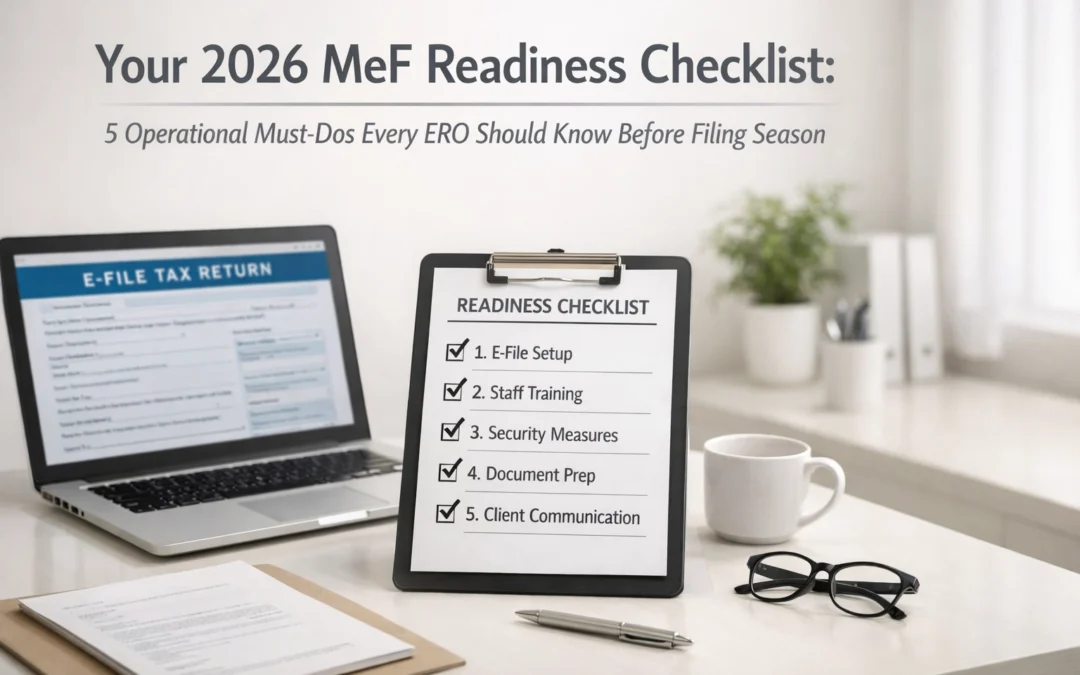
Filing season 2026 starts January 26 for individual returns and January 13 for business returns. Electronic Return Originators must verify system readiness before these dates. This checklist covers five operational requirements.
1. Verify EFIN and IRS e-Services Access
Check EFIN status through IRS e-Services before December 2025. Log in to confirm active status and expiration dates for all authorized users.
Required actions:
- Access e-Services portal at irs.gov
- Verify EFIN active status
- Check electronic signature PIN
- Review authorized user list
- Update contact information if changed
- Confirm acceptance agent authorization if applicable
Failed EFIN verification requires 45 days minimum for IRS processing. Submit applications or renewals immediately if issues exist.
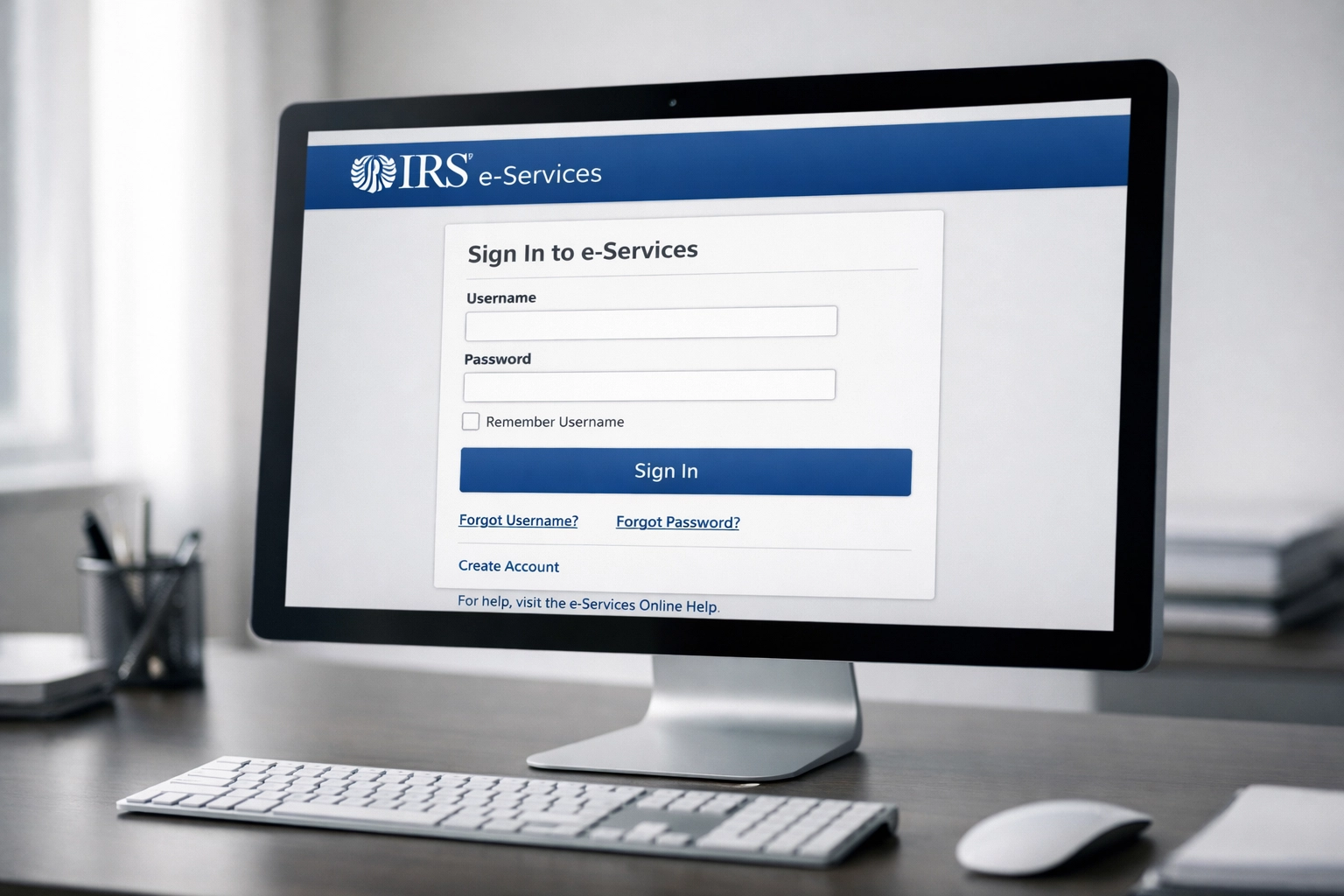
Test e-Services access with each staff member who submits returns. Reset passwords before filing season begins to avoid lockouts during peak periods.
Document EFIN numbers, assigned staff members, and access credentials in secure location. Create backup access procedures for emergency situations.
2. Complete Software Testing and Updates
Tax software requires testing before live transmission. Begin acceptance testing December 2, 2025 when IRS systems open.
Testing requirements:
- Install 2026 software updates
- Submit test returns through MATS (Modernized Acceptance Testing System)
- Verify successful acknowledgment receipt
- Test all form types your office prepares
- Check state return transmission if applicable
- Confirm PDF creation and storage functions
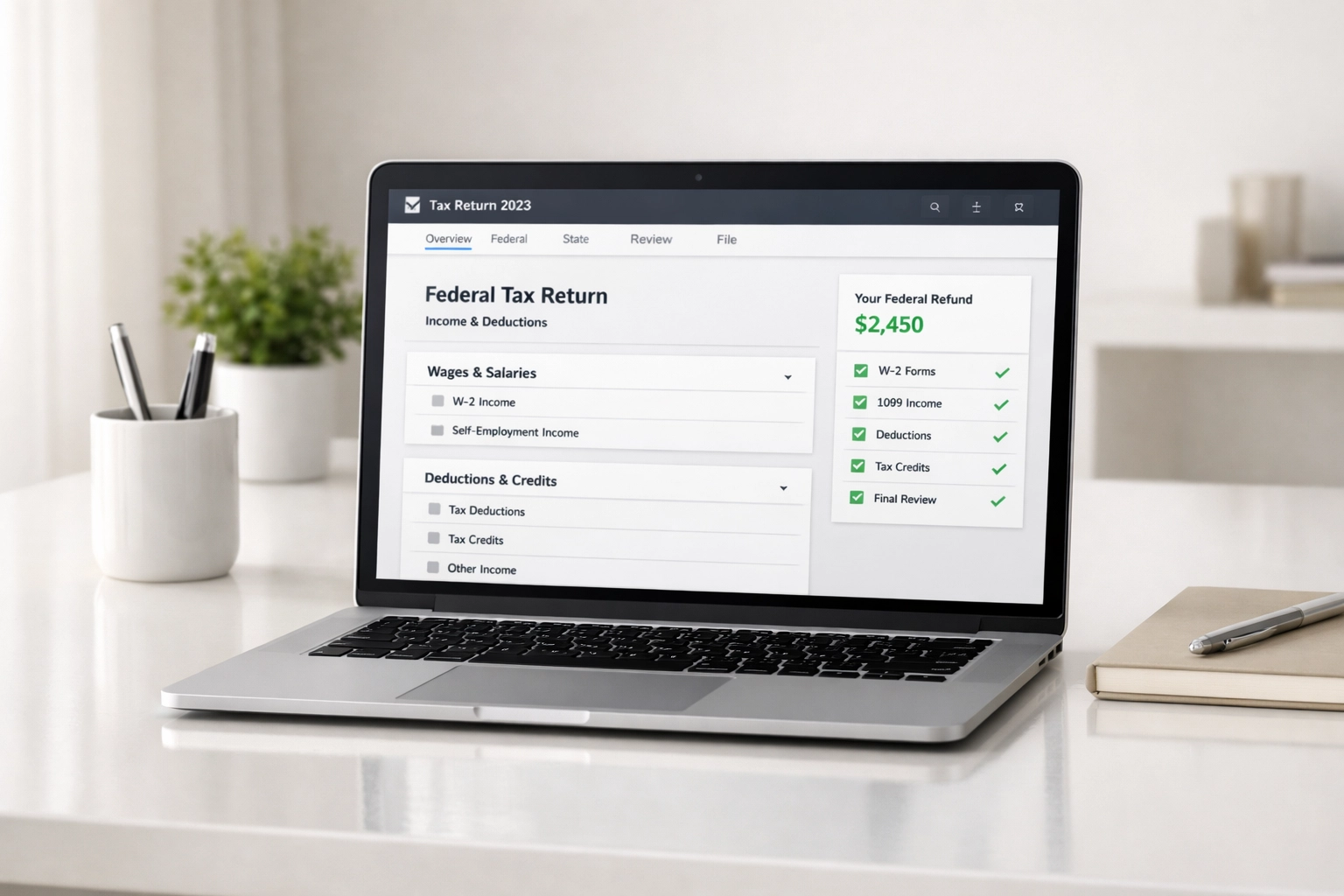
Software vendors release updates throughout November and December. Install updates immediately upon release. Delays create compatibility issues with IRS systems.
Run test transmissions for every return type: 1040, 1065, 1120, 1120S, 990, 1041. Include common schedules and forms. Test state returns separately if your practice serves multiple states.
Document successful test acknowledgments. Keep records of software version numbers and test dates. This documentation proves system readiness if IRS questions arise.
3. Audit Data Security and System Infrastructure
IRS requires specific security measures for EROs. Review security protocols before filing season.
Security checklist:
- Firewall active and updated
- Antivirus software current
- Operating system patches installed
- Password policy enforced (minimum 8 characters, changed every 90 days)
- Physical security for computers and files
- Encrypted storage for client data
- Secure backup system operational
- Access controls by user role
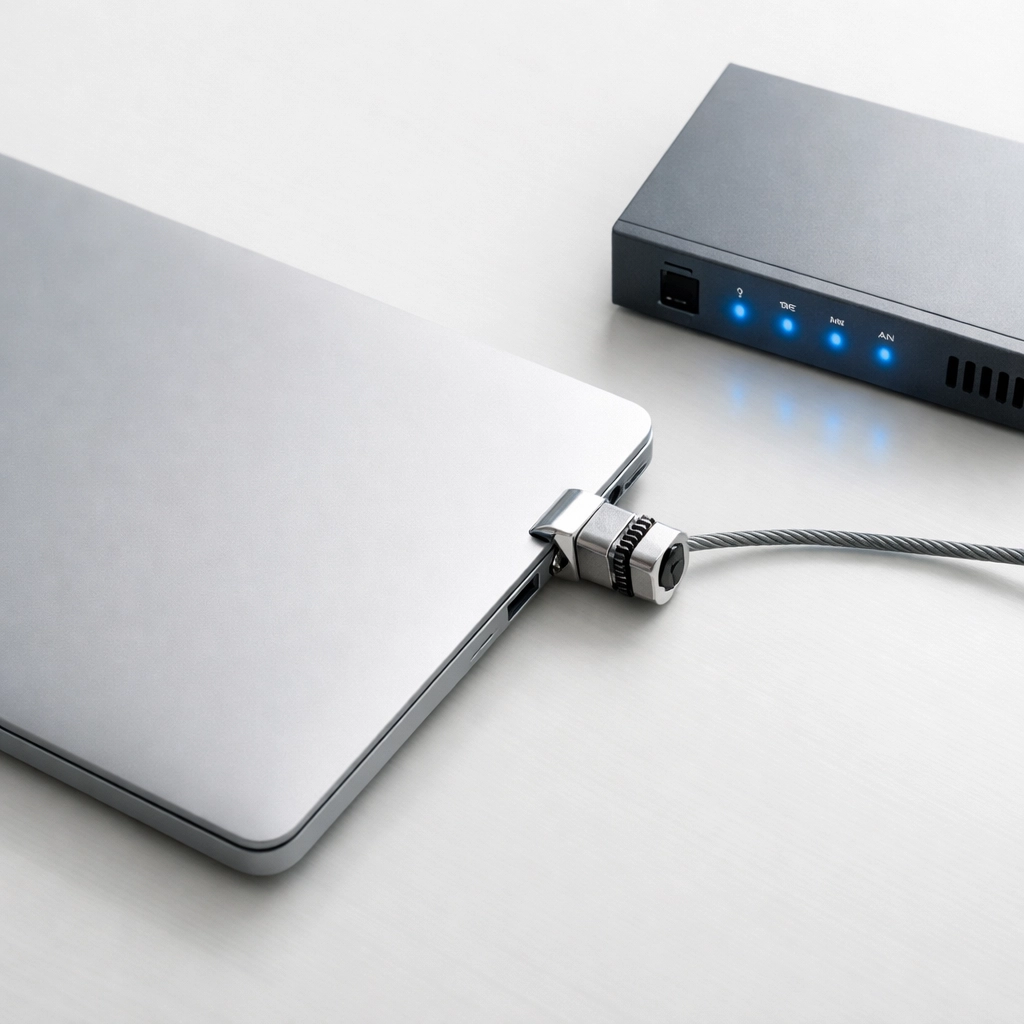
Test backup and recovery procedures. Simulate data loss scenario. Verify restoration works correctly. Backup failures during filing season cause business interruption and compliance violations.
Review client data access. Remove terminated employees from systems. Verify current staff access matches job requirements. Limit administrative access to essential personnel only.
Check internet connection speed and reliability. Peak filing season requires consistent connectivity. Identify backup internet options if primary connection fails.
4. Train Staff on 2026 Tax Law Changes
IRS implemented multiple changes for 2026. Staff training prevents errors and due diligence penalties.
Training topics:
- Standard deduction amounts
- Tax bracket adjustments
- Retirement contribution limits
- Form 1099-K reporting thresholds
- State-specific law changes
- Due diligence requirements for EITC, CTC, AOTC, HOH
- Form 8867 completion procedures
Due diligence penalties increased to $650 per failure in 2026. Review requirements with all staff who prepare returns claiming EITC, Child Tax Credit, American Opportunity Tax Credit, or Head of Household status.
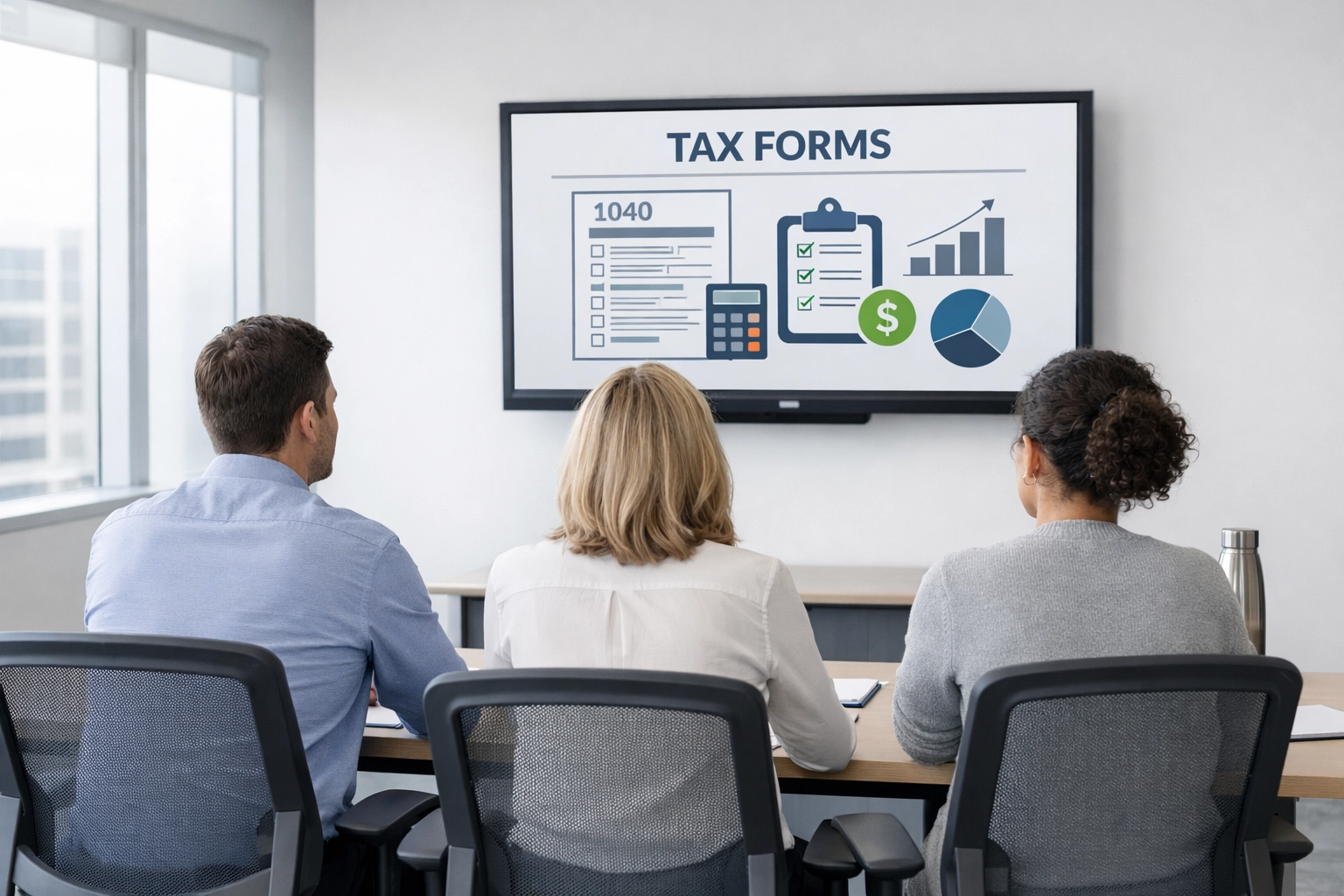
Schedule training sessions before January 13. Use IRS webinars, professional organization courses, or internal training materials. Document training completion for each staff member.
Create quick reference guides for common scenarios. Post updated tax tables and phase-out ranges in preparation areas. This reduces errors during high-volume periods.
Review engagement letter language. Confirm client authorization forms include current year. Update fee schedules if necessary.
5. Establish Filing Season Workflow and Contingency Plans
Operational efficiency requires defined processes. Document procedures before volume increases.
Workflow requirements:
- Client intake process
- Document collection method
- Return preparation assignments
- Review procedures before e-filing
- Client communication protocol for acknowledgments
- Rejected return handling process
- Extension filing procedures
- Estimated payment processing
Create contingency plans for common failures:
- Software malfunction
- Internet outage
- Power failure
- Key staff absence
- IRS system downtime
- Client emergency situations

Identify alternative filing locations if primary office becomes unavailable. Maintain current software licenses on backup devices. Keep paper Form 8453 stock for signature document requirements.
Test client communication systems. Verify email delivery works correctly. Check text message capabilities if used. Update client contact information during initial appointments.
Establish clear escalation procedures for complex situations. Define when to consult colleagues, software support, or IRS practitioner hotline. Document resources and contact information for quick access.
Review estimated tax payment procedures. Verify electronic payment options through EFTPS. Confirm state payment systems if applicable. Train staff on same-day payment cutoff times.
Implementation Timeline
Complete checklist items by these dates:
December 1, 2025: EFIN verification, software installation, security audit
December 15, 2025: Staff training completion, workflow documentation
January 10, 2026: Testing completion, contingency plan finalization
January 13, 2026: Business return filing begins
January 26, 2026: Individual return filing begins
EROs who complete preparation before filing season avoid operational disruptions. System failures during peak periods create client dissatisfaction and revenue loss.
Maintain checklist completion records. IRS audits may request documentation of preparation procedures. Professional liability insurance may require proof of reasonable operational standards.
Additional resources available at TIG Tax Pros including software solutions and professional support services.