

SEO Title: Scale Your ERO Practice Without Hiring More Staff
Slug: scale-ero-practice-without-hiring-staff
Excerpt: Learn proven strategies to increase your ERO capacity using automation, workflow optimization, and strategic tools: without adding headcount to your payroll.
Tags: ERO Operations, Tax Practice Management, Business Scaling, Tax Professional Tools, Practice Growth, Workflow Automation
Understanding Capacity Constraints in ERO Operations
Most Electronic Return Originators reach a capacity ceiling during peak filing season. The traditional response involves hiring seasonal preparers or expanding full-time staff. This approach increases overhead, training requirements, and operational complexity.
Alternative scaling methods focus on maximizing existing resource efficiency. By implementing systematic improvements to workflow, technology infrastructure, and client engagement processes, EROs can process significantly higher return volumes without proportional staff increases.
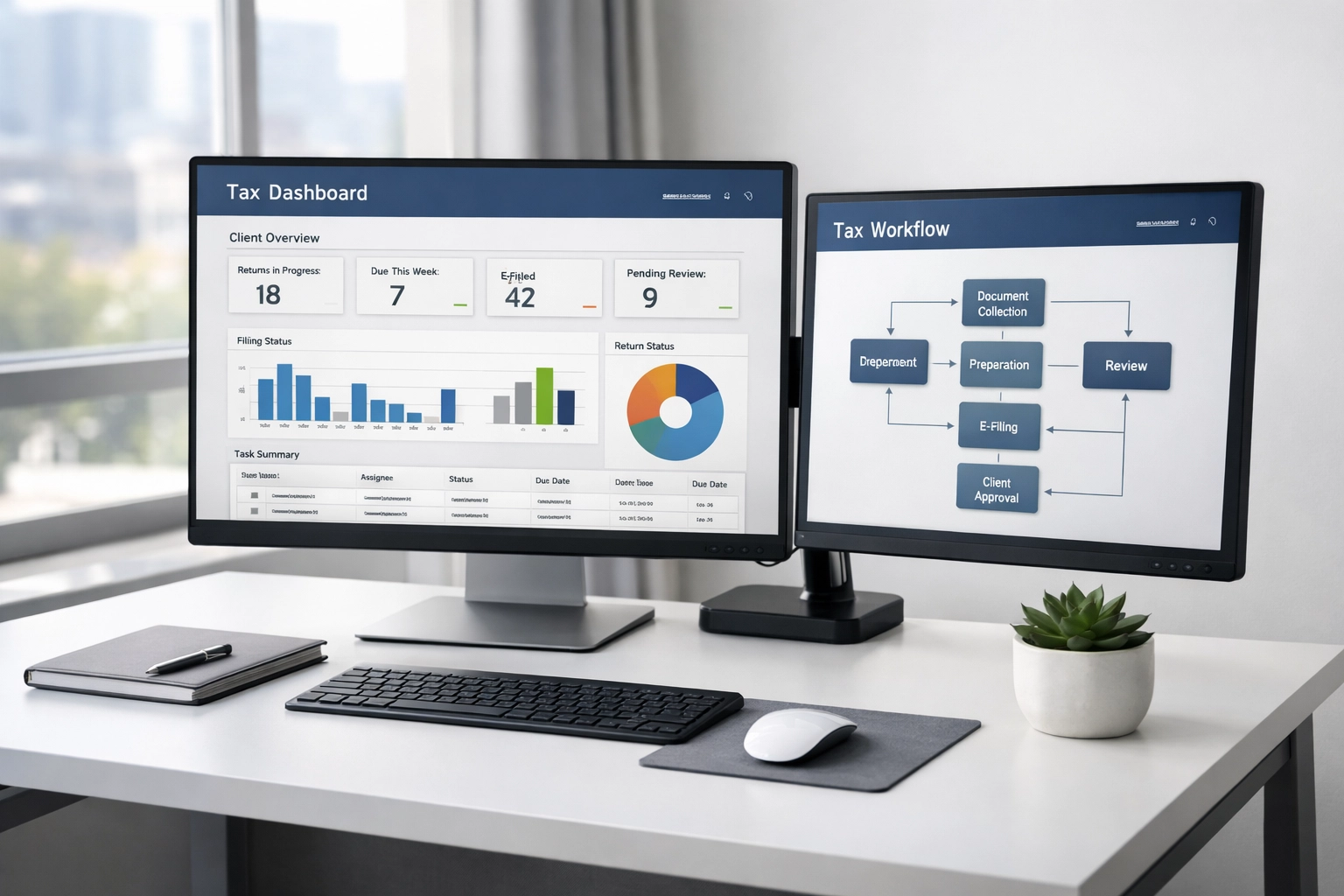
Automation of Routine ERO Functions
Automated systems eliminate repetitive tasks that consume preparer time. Document collection, data entry, and client communication represent primary automation opportunities.
Client Portal Implementation
Deploy secure portals that enable clients to upload documents directly into your practice management system. Integration with tax software eliminates manual data transfer. Clients complete organizers electronically, reducing data entry by 60-70% compared to manual processes.
Portal systems should include:
- Electronic signature capabilities for engagement letters and Form 8879
- Document upload with automatic categorization
- Secure messaging replacing email communication
- Status tracking visible to clients without staff intervention
Automated Workflow Triggers
Configure practice management software to automatically assign returns based on complexity, move completed returns to review queues, and send client notifications at key milestones. This eliminates manual task management and reduces supervisor oversight requirements.
E-Signature and Authorization Management
Implement electronic signature platforms integrated with your tax software. Manual printing, signing, scanning, and filing of Form 8879 consumes significant time during peak season. Electronic processes reduce authorization processing time from 15-20 minutes to under 2 minutes per return.
Process Standardization and Template Systems

Document standardized procedures for every return type your practice handles. Create template systems that reduce decision-making and research time.
Return Type Protocols
Develop step-by-step protocols for common return scenarios:
- W-2 wage earners with standard deductions
- Schedule C businesses by industry type
- Rental property returns with depreciation schedules
- Multi-state returns with California sourcing requirements
Templates should include common forms, typical documentation requirements, and quality control checklists specific to each return type.
Communication Templates
Create standardized client communication templates for:
- Initial engagement and document requests
- Missing information follow-up
- Return completion notifications
- Extension filing communications
- Payment plan setup instructions
Templates maintain consistency while reducing composition time from 10-15 minutes to under 2 minutes per communication.
Strategic Use of Service Bureau Models
Service bureau partnerships allow EROs to maintain client relationships while outsourcing return preparation. This model separates client-facing activities from technical preparation work.
Service Bureau Integration
Partner with qualified service bureaus that handle:
- Data entry from client-provided documents
- Return preparation following your firm's standards
- Technical research for complex issues
- Multi-state return preparation
Your staff focuses on client consultation, return review, and quality control. This structure allows one ERO professional to oversee 3-5 times more returns compared to full preparation models.
Quality Control Framework
Implement systematic review processes for service bureau work:
- Random sampling protocols (minimum 15% of returns)
- Focused review checklists targeting common errors
- Feedback loops to service bureau for continuous improvement
- Client satisfaction monitoring

Technology Infrastructure Optimization
Upgrading core systems increases throughput without additional labor.
Cloud-Based Tax Software
Cloud platforms enable multiple users to access returns simultaneously from any location. This flexibility allows work distribution across time zones and eliminates office capacity constraints.
Cloud systems provide automatic updates, eliminating manual software maintenance and reducing IT overhead.
Integrated Practice Management
Deploy comprehensive practice management systems that unify:
- Document management
- Tax preparation software
- E-filing systems
- Client relationship management
- Billing and payment processing
- Workflow tracking and assignment
Integration eliminates duplicate data entry and reduces switching between platforms. Staff productivity increases 25-40% compared to disconnected systems.
Bank Product Integration
If offering refund transfer or refund advance products, ensure direct integration with your tax software. Manual processing of bank products adds 15-20 minutes per return. Integrated systems reduce this to under 3 minutes.
Client Self-Service Expansion
Shift routine client interactions from staff-mediated to self-service.
Online Appointment Scheduling
Implement scheduling software that allows clients to book appointments directly. This eliminates phone tag and reduces administrative time spent on calendar management.
Payment Processing Automation
Enable online payment options for preparation fees, estimated tax payments, and balance due payments. Automated payment processing eliminates manual transaction entry and reduces collection overhead.
Return Access Portal
Provide clients with secure online access to current and prior year returns. This eliminates retrieval requests that interrupt staff workflow during busy periods.
California-Specific Scaling Considerations

EROs operating in California face additional compliance requirements that affect scaling strategies.
CTEC Registration Management
California Tax Education Council registration requirements apply to unlicensed preparers. When scaling through service bureau partnerships or contract preparers, verify all preparers maintain current CTEC registration for California returns.
Track CTEC registration expiration dates in your practice management system to prevent compliance gaps.
California E-File Mandate Compliance
California's mandatory e-file requirements for paid preparers apply to all returns prepared for compensation. Ensure any scaling strategy maintains 100% e-file capability for qualifying California returns.
FTB Practitioner Hotline Access
Scale support resources by training staff on effective use of the California Franchise Tax Board Practitioner Priority Service. This dedicated hotline reduces research time for California-specific issues.
Outsourced Administrative Functions
Delegate non-technical functions to specialized providers.
Bookkeeping and Billing
Contract bookkeeping services to handle accounts receivable, billing, and collections. This frees licensed professionals from administrative tasks.
Reception and Client Scheduling
Virtual receptionist services answer calls, schedule appointments, and handle routine inquiries following scripts you provide. Cost runs $300-800 monthly compared to $2,500-3,500 for full-time reception staff.
Marketing and Client Communication
Outsource email marketing, social media management, and website maintenance to specialized firms. Technical tax professionals typically generate poor return on time spent on marketing activities.
Systematic Knowledge Management

Capture institutional knowledge in accessible formats that reduce dependency on individual expertise.
Research Library
Maintain a searchable database of research memos addressing complex issues your practice encounters. When preparers research an issue, require documented research memos added to the library.
This prevents duplicate research on recurring issues and reduces research time from 45-60 minutes to 5-10 minutes for previously addressed topics.
Training Materials
Develop video training modules for common procedures, software functions, and new hire onboarding. Video training allows asynchronous learning and reduces supervisor training time requirements.
Checklist Systems
Implement mandatory checklists for return types, review procedures, and quality control steps. Checklists reduce errors and ensure consistent processes regardless of individual preparer experience levels.
Performance Metrics and Capacity Planning
Track metrics that identify bottlenecks and measure scaling effectiveness:
- Returns per preparer per day by return complexity
- Average time from document receipt to completion
- Review turnaround time
- Client portal adoption rate
- Automation utilization percentage
- Service bureau return volume and accuracy rates
Monitor these metrics weekly during tax season. Identify constraint points and deploy resources to eliminate bottlenecks before they cascade.
Implementation Priority Framework
Deploy scaling strategies in this sequence:
- Client portal and document automation (highest immediate impact)
- Communication templates and standard procedures
- E-signature integration
- Service bureau partnership for overflow capacity
- Practice management system upgrade or optimization
- Administrative function outsourcing
- Systematic knowledge capture
This sequence prioritizes changes with fastest implementation and highest return on investment.
Scaling ERO capacity without staff expansion requires systematic improvement across technology, processes, and strategic partnerships. Implementation of these strategies typically increases per-preparer capacity by 40-75% within one tax season. Focus on eliminating repetitive manual tasks, standardizing processes, and leveraging specialized external resources for non-core functions.