

The tax preparation industry is experiencing a fundamental shift. AI for tax professionals is no longer a distant concept: it's reshaping how tax practices operate today. With 75% of firms struggling to hire qualified staff and 60% reporting team burnout during busy season, tax automation has become essential for survival and growth.
1. Automated Document Extraction Eliminates Manual Data Entry
The most immediate impact of tax automation is the elimination of manual data entry. Advanced optical character recognition (OCR) systems now scan W-2s, 1099s, K-1s, and supporting documents with 98% accuracy, reducing manual input by up to 90%.

Tax professionals no longer spend hours typing information from paper documents. AI systems automatically read, categorize, and extract specific data like income amounts, deductions, and tax withholdings. This technology recognizes various document formats and handwriting styles, making it effective across different client scenarios.
The time savings are substantial. What previously took 30-45 minutes per complex return now requires 5-10 minutes of professional review. This efficiency gain allows firms to handle larger client volumes without proportional staff increases.
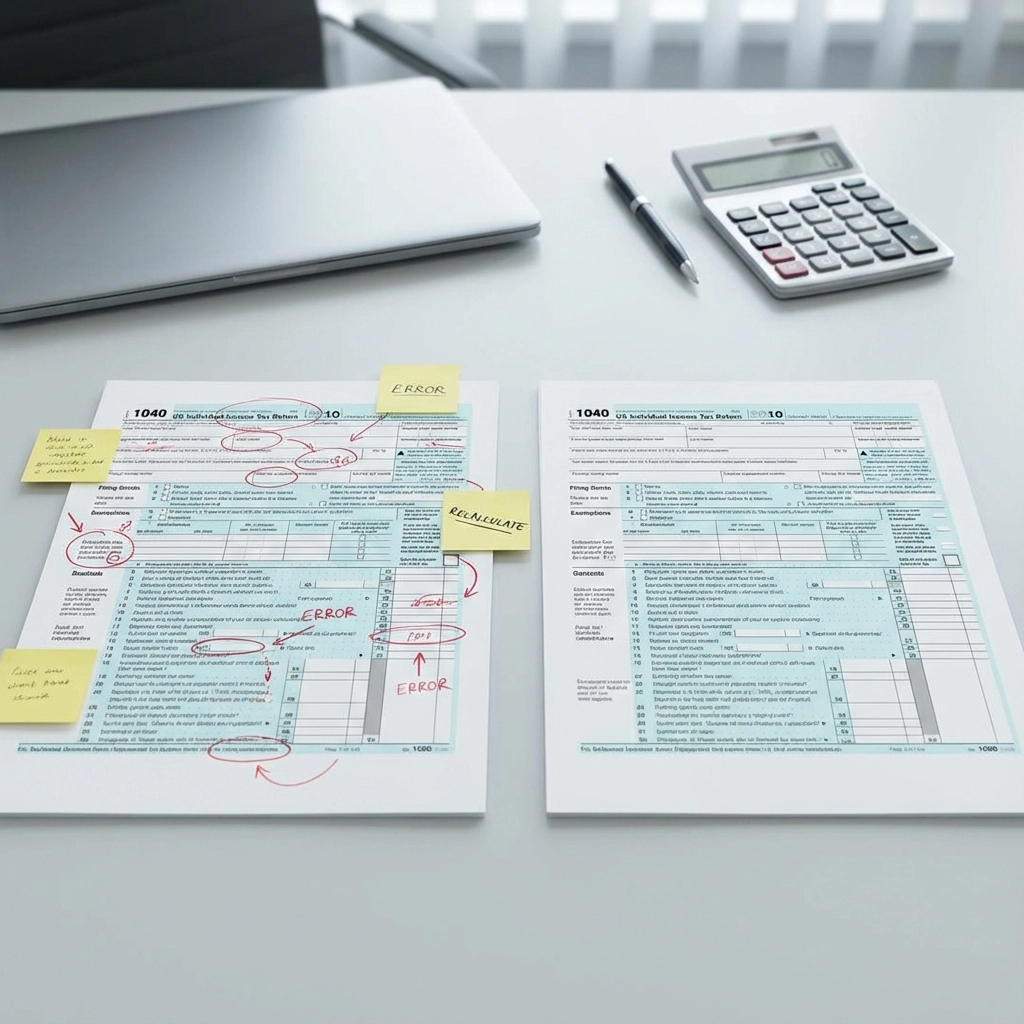
2. Error Rates Drop from 21% to Less Than 1%
Manual tax preparation carries significant compliance risks. IRS data shows that manually prepared returns have a 21% error rate, while returns prepared with automated systems show less than 1% error rates.
Common errors like transposed numbers, missing forms, and incorrect calculations become virtually extinct with AI assistance. The technology performs real-time validation checks as data enters the system, flagging potential issues before they become problems.
This error reduction translates to fewer IRS notices, reduced liability exposure, and improved client satisfaction. Firms report spending 70% less time on post-filing corrections and amendments when using automated systems.
3. Around-the-Clock Processing Capacity
Tax technology trends in 2025 include continuous operation capabilities. AI tax systems work 24/7, processing returns even outside business hours. This constant availability helps firms manage seasonal workload spikes without requiring staff overtime.
The system continues organizing documents, running compliance checks, and preparing returns for professional review while staff focus on client communication and strategic planning during business hours. This continuous operation effectively extends firm capacity without additional labor costs.
Firms report processing 40-60% more returns during the same busy season period compared to traditional workflows, all while maintaining quality standards.
4. Single-Platform Workflow Integration
Modern tax automation solutions consolidate the entire preparation process into unified platforms. Systems like Thomson Reuters Ready to Review eliminate the need to switch between multiple programs during tax preparation.
The integrated workflow automatically scans documents, extracts data, processes information for compliance, flags outliers for review, and delivers fully populated returns ready for professional oversight. This seamless process reduces training time for new staff and minimizes workflow interruptions.
Tax professionals work within a single interface from client intake through return delivery, improving efficiency and reducing the learning curve for complex tax situations.
5. Intelligent Compliance Checking
AI for tax professionals includes sophisticated compliance monitoring that runs automated checks against current tax code. These systems identify missing signatures, income mismatches, unreported income, and potential red flags before returns reach IRS processing.

The technology continuously updates with tax law changes, ensuring compliance checks reflect the most current regulations. This proactive approach identifies potential issues early, reducing the risk of post-filing corrections and penalties.
Firms using automated compliance checking report 85% fewer client callbacks regarding missing information or documentation requirements.
6. Processing Speed Increases by 66%
Tax automation creates substantially faster processing cycles. Combined with automated document processing and integrated workflows, firms achieve 66% faster completion times compared to traditional methods.
This speed improvement allows firms to meet tight deadlines more effectively and accommodate last-minute client requests without compromising quality. The technology handles routine processing tasks in minutes rather than hours, freeing professionals for value-added services.
Faster processing also enables firms to offer expedited services as premium offerings, creating additional revenue opportunities during busy season.
7. Strategic Focus Shift to Advisory Services
The most significant change involves how tax professionals spend their time. By automating routine data entry and compliance checks, firms report spending 30% more time on tax planning and strategy: services that generate 2-3 times more revenue per client than basic preparation.

Tax professionals transition from data processors to strategic advisors, focusing on:
- Year-round tax planning strategies
- Business structure optimization
- Retirement and investment planning
- Estate planning coordination
- Multi-year tax projections
This shift allows firms to build deeper client relationships while commanding higher fees for expertise rather than time spent on manual tasks.
Implementation Considerations
Successfully adopting tax automation requires strategic planning. Firms should evaluate their current workflows, identify bottlenecks, and select solutions that integrate with existing systems.
Training staff on new technology takes time, but most systems are designed for intuitive use. The initial learning period typically spans 2-4 weeks, after which productivity gains become apparent.

Cost considerations include software licensing, hardware upgrades, and training time. However, most firms report positive ROI within the first tax season due to increased capacity and reduced labor costs.
Looking Forward
Tax technology trends indicate continued advancement in artificial intelligence capabilities. Machine learning algorithms improve accuracy over time, while natural language processing enhances client communication automation.
The competitive advantage goes to firms that embrace these changes early. As client expectations rise and competition intensifies, automated efficiency becomes a differentiating factor in market positioning.
Tax professionals who integrate AI automation effectively will handle larger client volumes, provide higher-quality service, and build more profitable practices. The technology transforms tax preparation from a seasonal labor-intensive service to a year-round strategic advisory business model.
For tax professionals considering automation, the question isn't whether to adopt these technologies, but how quickly they can implement them effectively. The firms that move first will establish the strongest market positions as the industry continues evolving toward automated efficiency standards.